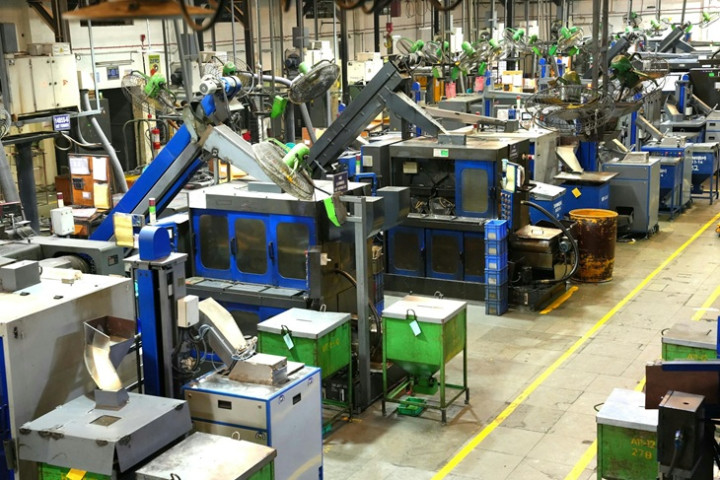
The manufacturing industry has been historically competitive. In previous years, it was a race for mechanical adoption and sheer output. Today, however, companies are gaining the edge through digital intelligence. While automation was once considered an exclusive technology reserved for top players, it has developed into an operational necessity in today's high-speed landscape.
In the modern manufacturing landscape, integrating automation into shop floor operations has allowed for a constant influx of real-time and highly insightful data, revolutionizing how business intelligence is approached industry-wide. For executives and owners, effectively adopting these processes is essential to staying competitive.
The Evolution of Automation in Manufacturing
At its early conception in the world of manufacturing, automation was defined by repetitive and simple chores that robots could perform, which were especially helpful regarding tasks too dangerous and monotonous for humans. These early iterations operated in silos, and were highly precise and efficient, but rarely impacted the overarching productional ecosystem.
However, the new wave of AI in the manufacturing sector is being defined by interconnectedness and real-time strategy rather than sheer output speed.
The era-defining transition to intelligent systems has driven robotic hardware installations to new heights, with the global manufacturing sector recording record-breaking numbers in recent years. This represents a massive shift in automation’s importance across the industry as a whole, with each piece of equipment serving as a key node in the wider network rather than operating in a vacuum.
This evolution has been accelerated through technology like IoT sensors and machine learning, which have undergone a rapid surge in production settings worldwide, thanks to their robust and highly efficient functionality in data analytics. This level of technological integration has allowed manufacturers to manage and assess machines through a digital interface. These digital twins enable the simulation and analysis of complex manufacturing processes before any physical changes are made.
By leveraging automation as an ecosystem rather than just a collection of tools, there are abundant avenues for institutional innovation.
How Automation Unlocks Actionable Data for Manufacturing Companies
Automated processes and business insights can effectively influence one another when there is a constant and reliable stream of signals generated at the machine level. Data no longer requires manual collection, reducing human error and improving processing times. Automation insights can now be generated through edge computing and sensor arrays that interpret physical movement and transform it into digital metrics.
Gaining Granular Awareness of OEE and KPIs
Automation can continuously track key performance indicators (KPIs) and overall equipment effectiveness (OEE), which are important metrics for measuring the manufacturing floor’s performance and quality. A key advantage of an automated environment is that OEE is a real-time dashboard rather than a retrospective report.
This allows teams to predict bottlenecks before they occur. If a cell operates below its expected speed, automation can pinpoint the exact cause, enabling instant troubleshooting and maintaining operational continuity.
Enhancing Quality Control
Automation has completely changed quality control processes in the manufacturing industry. High-resolution sensors and machine vision systems detect microscopic deviations instantly, operating at speeds beyond human capabilities. This feedback loop maximizes quality while minimizing waste.
In fact, manufacturing research has confirmed that real-time data from automation enables easier tracking and change monitoring in manufacturing quality or inefficiencies, preventing costly rework in the future. When any deviation is detected, systems can automatically pause the line and prevent faulty components from progressing, reducing the number of fully assembled but defective products that need to be disposed of later.
Applying Insights for Strategic Advantages
Automation’s greatest potential lies in its contribution to building business strategies. Data collection is only the first step — the true value lies in the decisions it informs, whether capital allocation or market agility. When used tactically, AI unlocks actionable insights and growth opportunities.
Cutting Costs With Predictive Maintenance
An immediate application of automation insights is transitioning from reactive maintenance to predictive maintenance. Unplanned downtime is costly in any manufacturing setting, further exacerbated by the expense of emergency repairs, which often require specialized equipment to perform effectively. By using real-time data to monitor equipment health, sensors can detect subtle changes in vibration or energy consumption that could lead to mechanical failure, eliminating the need for reactive troubleshooting or unnecessary maintenance.
Inventory Optimization
Real-time production data also links the factory to the wider supply chain. Traditionally, manufacturers would keep inventory levels higher to ensure a reliable buffer during production uncertainties. In the modern landscape, however, accurate views of production rates have allowed companies to adopt a just-in-time model. Materials can now be triggered by actual operational needs rather than conjecture, reducing carrying costs and freeing up capital.
Informing Strategy and Future Innovation
Long-term automation data informs capital expenditure and innovation. Executives can analyze production data and identify persistent bottlenecks that might indicate the need for equipment upgrades. Additionally, it could reveal new product variation opportunities. If information suggests that a specific line is highly adept at producing small-batch runs, a company could consider shifting its focus to customized, high-margin products.
Recent data from the World Economic Forum’s Global Lighthouse Network has highlighted that facilities that scale automation and AI across their operations achieve an average 53% increase in productivity. An example is Agilent Technologies in Shanghai, which utilized 50 AI-focused use cases to drive a 56% increase in productivity and a 31% improvement in lead times. These facilities demonstrate that transitioning from isolated pilots to strategies led by intelligence is a modern-day blueprint toward industrial success.
Staying Competitive With Real-Time Automation Insights
The current state of manufacturing has seen data interpretation take on the same importance as assembly processes themselves. Automation’s value is moving from merely increasing production speeds to shaping business decisions, which is hardly surprising in today’s data-first reality. Being able to process and analyze data as efficiently as possible has become a necessity for surviving a volatile global economy.
The insights gained from real-time monitoring and predictive maintenance provide a foundation for growth that is both highly sustainable and scalable. Those who understand the immense value of real-time data in the contemporary landscape have the best chance at being tomorrow’s industry leaders.
Lou Farrell
Lou is the senior editor of industrial manufacturing at Revolutionized Magazine, specializing in writing about the impacts of technological advancements on the modern world of production. For over five years, he has pursued his passion for writing by providing insights into automated industry processes and sustainable manufacturing.