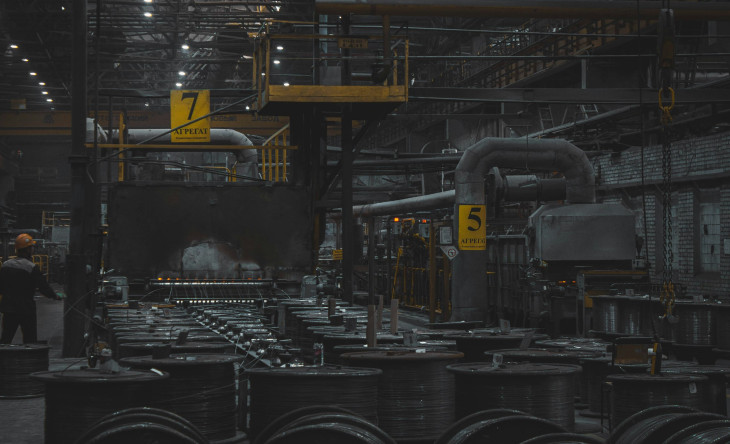
Extreme manufacturing environments leave little room for equipment failures or communication gaps. The industrial Internet of Things (IIoT) gives manufacturers real-time visibility into operations, helping them maintain productivity and reliability even under harsh conditions.
What Is Industrial IoT?
Industrial IoT is the use of connected sensors, industrial equipment, software platforms, and networks that collect and exchange operational data throughout a manufacturing facility. It creates connected ecosystems where machines continuously share performance information. Data from sensors can show equipment health, environmental conditions and more, helping operators make informed decisions before small issues escalate.
As more manufacturers digitize operations, IIoT has become a practical tool for improving productivity and maintenance practices.
The Unique Challenges of Extreme Manufacturing
Extreme manufacturing environments place technology under unique conditions. These include:
- Temperatures exceeding the operating limits of consumer electronics
- Corrosive moisture or chemicals
- Constant vibration from heavy machinery
- Dust and debris
- Radio interference from industrial equipment
These conditions can interrupt communications and reduce data accuracy if the infrastructure is not designed for the environment. Maintaining reliable connectivity in these facilities sometimes calls for purpose-built hardware and resilient networking technologies that work despite environmental stress.
Driving Efficiency and ROI With IIoT Data
Data becomes valuable when it supports faster decisions and measurable operational improvements. IIoT platforms give maintenance teams and plant managers the information they need to optimize production workflows and costs.
Reducing Costly Downtime Through Predictive Maintenance
Predictive maintenance is one of the strongest business cases for IIoT adoption. Traditional schedules often rely on regular intervals or repairs after equipment fails.
IIoT allows for more precision, as it continuously monitors each machine’s operating conditions. When sensors move outside normal ranges, maintenance teams receive alerts before failures interrupt production.
Research covering more than 340 manufacturing organizations found that AI-enabled predictive maintenance reduces unplanned downtime by 35% to 50%, leading to significant time and cost savings.
Boosting Productivity in Harsh Environments
Real-time visibility helps manufacturers improve performance even amid challenging working conditions. Plant managers can identify production bottlenecks and adjust workflows using live data over reports created after the fact. Continuous monitoring also supports better inventory planning and energy management.
For facilities with round-the-clock operations, these improvements accumulate over time through higher throughput and more efficient use of labor and equipment.
Building Resilient Systems for Unforgiving Conditions
Successful IoT deployment in extreme manufacturing requires infrastructure designed specifically for industrial applications. Sensors and networking technologies must perform well and deliver reliable data under environmental stress.
Deploying Ruggedized Hardware and Sensors
Modern industrial hardware includes seals, reinforcements and protection against moisture, vibration and dust. These features allow sensors and networking equipment to remain operational where standard devices may struggle.
The industrial manufacturing sector has also become one of the most mature in terms of network and cloud infrastructure, with 54% of executives believing so. This trend reflects continued investment in technologies that improve operational efficiency.
Ensuring Uptime with Self-Healing Mesh Networks
Reliable communications are essential for any IIoT deployment. In environments filled with steel structures, moving equipment or radio interference, maintaining uninterrupted connectivity can be challenging.
Self-healing kinetic mesh networks address this challenge by allowing data to travel through multiple communication paths. This approach improves reliability by eliminating the risk of a single point of failure and enabling seamless routing around outages and obstructions.
Seeing the Transformation in Real-World Scenarios
Manufacturers across multiple industries have already demonstrated the value of IIoT. Organizations like General Electric and Siemens use IoT integration to track equipment health and improve production efficiency.
Successful implementations typically begin with clearly defined objectives, measurable performance indicators and realistic financial expectations. Finding convincing business cases helps operators identify the specific benefits an IIoT solution can provide.
Moving Toward a More Connected Future
IIoT gives manufacturers the data and connectivity needed to keep operations running efficiently in demanding environments. Investing in resilient IIoT infrastructure can help improve uptime and deliver measurable returns over the long term.
