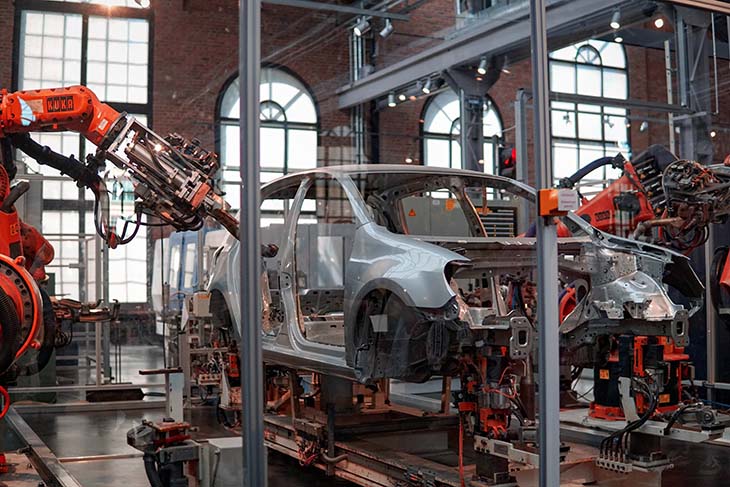








Even though the assembly line is supposed to be foolproof in theory, human error has a funny way of showing up when it’s least expected. What if there was a way to truly mistake-proof the process? With Poka-Yoke by design, that just might be possible.
What Does Poka-Yoke by Design Mean?
Poka-Yoke originated in Japan. In English, the term means “mistake-proofing” or “error-proofing.” It originated as Baka-Yoke, meaning “idiot-proofing,” before the Toyota Production System adopted and formalized the concept.
To make something Poka-Yoke by design is to create a built-in error prevention mechanism, designing out the possibility of human error in manufacturing. Facilities can accomplish this by preventing, correcting or drawing attention to mistakes as soon as they occur.
It’s not about catching defects after the fact, but about designing processes where they are impossible in the first place. The expenses associated with substandard product quality make up a substantial portion of an organization’s overall costs, so mitigating mistakes entirely is a strategic business decision.
The Three Primary Types of Poka-Yoke
While the concept of Poka-Yoke is loosely defined in the context of manufacturing, it is generally accepted that there are three primary types. The first is control, which involves physically preventing errors from occurring. For example, a device can prevent a worker from orienting a workpiece incorrectly before it is processed.
Warning systems alert operators to potential issues before they become problems — like when a passenger car chimes until the driver’s seat belt is fastened. Common solutions include light curtains and warning lights.
The third and final type is guidance, which leverages instructions and visual aids to help assembly line workers complete tasks correctly. Color-coded wires, weighing systems and locator pins are some examples.
The Start of Mistake-Proofing Assembly
Despite how it may seem, Poka-Yoke is not an isolated activity on the assembly line. Viewing it that way completely overlooks its crucial connection to inventory organization and material handling. This concept’s place extends to warehousing as it relates to the principle of lean manufacturing.
Upstream issues can translate into downstream defects, as manufacturers source assembly line elements directly from storage facilities. Improper storage can increase the likelihood of defects before an operator ever touches a part. Proper organization and material flow are foundational for an error-proof system.
Warehouses often require multiple racking solutions to store and access inventory. Proper selection can increase facility productivity and help prevent errors later on. For instance, a double-deep racking system increases capacity by 30% since it allows facilities to store items two pallets deep. However, it requires a specialized forklift with a double-reach mechanism for picking.
Ensuring materials are effectively stored, organized and delivered to the line helps keep parts from going missing or being damaged, preventing the warehouse from becoming the common source of errors.
The Role of Ergonomic Lifts and Fixtures
Manufacturing professionals can deploy ergonomic lifts and fixtures to help mitigate human error. Workers at the assembly station perform repetitive, tedious work day in and day out, which may eventually lead to inattentiveness or strain. Ergonomic equipment serves a dual purpose, helping enhance both operator safety and quality control.
For instance, facilities can integrate sensors or programmable logic controllers into smart lifts to ensure they only raise a part to the correct height for the next step. This virtually eliminates the possibility of human error.
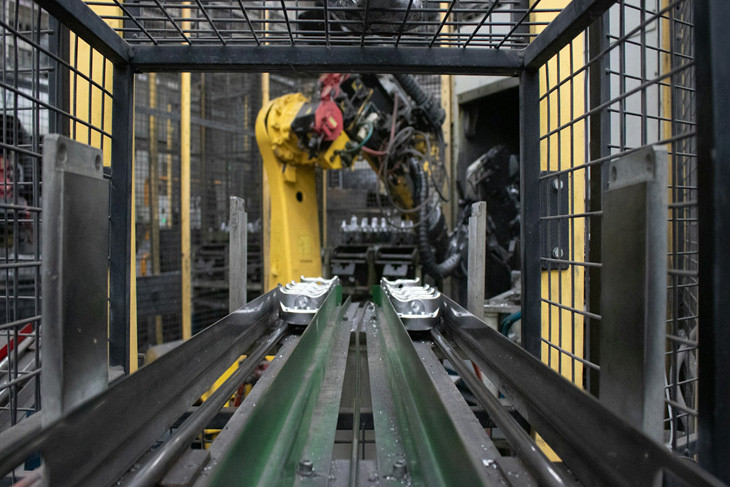
Engineers can also design custom fixtures to support or locate workpieces. For example, they can create a jig with built-in sensors that confirm all components are present before proceeding. Alternatively, they can build a fixture with asymmetrical pins to ensure parts can only be loaded in the correct orientation.
Modern technology like three-dimensional printing enables manufacturers to create custom, cost-effective lifts, fixtures and jigs rapidly, so even smaller, less-resourced facilities can incorporate Poka-Yoke principles into the assembly line.
How Does Poka-Yoke Work in Practice?
One case study examined how a biscuit manufacturing facility in Latin America integrated lean manufacturing and Poka-Yoke principles. It aimed to address high waste and low production efficiency to increase profitability and competitiveness. It decreased its scrap rate from 15% to 4% and increased its quality rate of finished products to 95.9%.
In addition to mitigating virtually all product defects, the factory improved machine availability, equipment effectiveness and staff performance. Since the system is designed to make the correct action easy and its incorrect counterpart impossible, implementation is often successful.
In another case study, a facility utilized a modular pick-to-light system designed with Poka-Yoke in mind. The tool used visual cues to guide workers through the assembly process. It virtually eliminated all assembly, packaging and order processing errors, thereby increasing efficiency. It reduced the error rate by 35% and increased assembly speed by 35%.
How Manufacturing Facilities Can Benefit
The assembly line is inherently a stressful environment. Workers continuously perform repetitive, error-prone tasks. If they make a mistake — which is almost inevitable — they become responsible for unexpected delays and costly rework.
Manufacturing facilities can benefit from incorporating ergonomic fixtures and lifts for a Poka-Yoke-by-design approach. They can drastically reduce defects, which lowers rework costs. It would also increase throughput and overall productivity, as operator morale substantially improves when safety improves and strain decreases.
Applying Principles to the Assembly Line
Since human error is so common, manufacturing professionals should design systems that account for it. By making it virtually impossible to mess up in the first place, they can increase throughput and decrease costs. Ergonomic fixtures and lifts can lay the foundation for a Poka-Yoke-first facility.