










Manufacturing equipment upgrades require careful evaluation as industry teams balance performance, cost and long-term productivity. During any breakdown or at the start of a new fiscal year, the question arises of whether to upgrade or replace essential machinery. A new part might keep machinery running for another year or be detrimental in the long term.
Discover the scenarios in which it is best to commit to one action or the other for financial stability and sustained productivity.
1. CNC (Computer Numerical Control) Machines
CNC machines, such as lathes and mills, are most commonly used in materials production, whether shaping plastic or cutting metal. Because they exert so much force and experience nearly constant pressure on their axes, numerous factors affect their lifespan.
For example, a CNC lathe's main spindle bearing assembly experiences up to 66% less vibration values when lubricated well, boosting longevity. This is only one part of the larger picture.
It's time to upgrade when technicians start compensating for an inadequate number of axes. Frequent adjustments and setups for different processes put more wear on the machine.
The downtime also hurts the bottom line, as it leads to lost bids because speed is a concern. Older CNC machines also lack the quality-of-life features of modern alternatives, including Industry 4.0 integrations, simulations and more customizable programming, that could make quality control and productivity easier to manage.
Hold on to the CNC machine if the return on investment (ROI) is not there. If a CNC machine costs hundreds of thousands of dollars, the ROI must be visible and planned. Otherwise, retrofitting and relying on spare parts can be a dependable path forward.
2. Injection Molding Machines
The life of an injection mold depends on its classification, ranging from 500 to 1 million cycles, and there are ways to extend the longevity of all machinery. It is used in diverse industries, including automotive and toy manufacturing. Older injection molding machines can run at slower speeds and use various fuels, whereas more expensive, modern models can be all-electric and faster.
The value of these manufacturing equipment upgrades, based on class and application, can justify the cost of a replacement, especially when scaling production.
Teams should upgrade if the equipment's fuel efficiency is eroding profit margins. All-electric options are cheaper in terms of energy use, optimizing beyond just the machine’s maintenance costs. If teams are investing too much time into fixing pumps or leaks, then cycle times get cut short and should prompt an upgrade.
A full-scale replacement should be delayed if the molding machine is handling parts or products with wider tolerances. If it is reliable and there is a consistent preventive maintenance program, it should last long enough until investing in higher-quality machinery is justifiable.
3. Welding Equipment
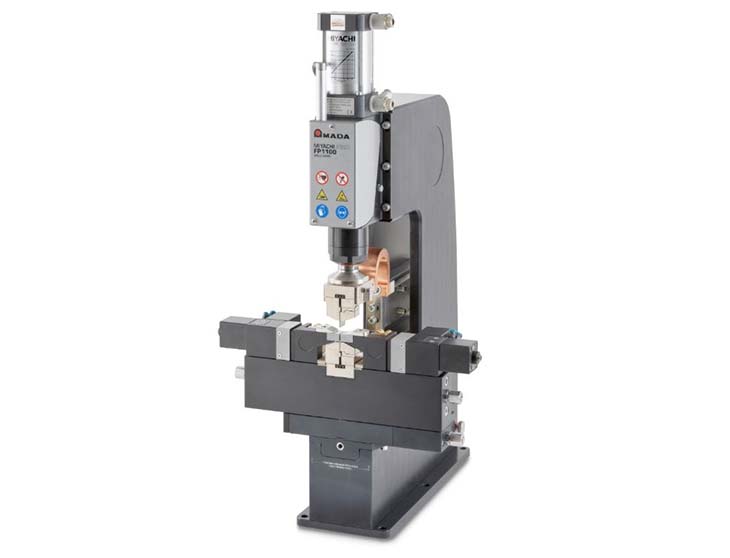
All welding machines, including stick and gas metal arc welding, are vital to the maritime, aerospace, construction and automotive industries, among others. The cost and lifespan of these tools vary drastically, especially if manufacturers consider safety as an expense.
Welding has an incidence rate of 1.1 per 100 full-time employees, making it a frequent source of injuries. Poorly maintained equipment can exacerbate this and, over time, increase costs to the point of necessitating a full replacement.
To get decades of use out of a welding machine through gradual upgrades, teams need well-trained welders. They will repair and refurbish the equipment they are most familiar with until companies can afford the costs. Over time, welders do lose precision, even with care, so this may be a consideration.
Unfortunately, if the organization is starting to work with new materials that require a new range of welding technologies, replacements or additional installations may be necessary.
4. Additive Manufacturing
From prefabricated construction to prototyping aerospace parts, 3D printing has become a mainstay in most facility environments. The intensity and scale of these machines are vast, especially when considering the printing material and feed. Fused deposition modeling is common enough for household use, while metal-powder bed fusion is ideal for commercial applications.
The differences in these markets show that additive manufacturing could cost hundreds or even thousands of dollars.
Some high-performance materials need stronger 3D printers, and if the current printer is unable to handle them without defects, then it may be time to upgrade. Some even incorporate integrations like artificial intelligence or laser cutting, which could execute tolerances as precise as 0.002 inches with the right tech. New machinery can achieve better distribution and accuracy, ensuring repeatability.
Additionally, more advanced machines include greater automation tools, reducing labor costs. These could encourage a replacement.
One of the biggest reasons to avoid investing in a new 3D printer is its volatility. It is still an evolving technology, and new models and programs appear all the time, boosting one metric or introducing another optimization. It could be overwhelming for the team to adjust to complete replacements all the time, especially if the upgrade within a year is not going to pay for itself in five, when a better version could be available.
5. Packaging and Assembly Lines
Production comprises countless individual machines, from rollers and conveyor belts to palletizing equipment. The range is extraordinary, making the lifespan and ROI of each component difficult to clarify. Organizations can also embrace more manual processes or large-scale robotics, making the cost of any upgrades wide-ranging.
Another factor to consider is corporate goals and values, as compliance adherence and a drive for more circular packaging alter costs further.
If a team is experiencing daily bottlenecks and breakdowns due to ineffective assembly equipment, the flexibility and speed provided by a new asset could be worth the cost. Production lines with labor shortages may see the most value from these improvements, as automation can supplement a strained workforce that may struggle to keep up with maintenance needs.
The equipment could be suitable if the line regularly delivers and processes purchase orders. Incremental improvements, backed by a strong maintenance team, could keep operations running smoothly without the need for robots that cost hundreds of thousands of dollars. Packaging and assembly line workers are constantly seeking opportunities for improvement, whether through maintenance or quality issues, making them the best judges of when to replace or retrofit.
The Essential Manufacturing Equipment Upgrades
Everyone from production technicians to corporate accountants will find it challenging to balance the optimal timing for replacing equipment with that for a strategic upgrade. Fortunately, there are trends, depending on the machine.
Some are more intuitive than others, having many years of research and development behind them as brands and industry-staple utilities. Others are more novel or are an experiment the company is banking on, requiring more nuance and precision to maintain.
Following these recommendations can guide the workforce in the right direction, spending only as much money and time as needed on equipment upkeep.
Lou Farrell
Lou is the senior editor of industrial manufacturing at Revolutionized Magazine, specializing in writing about the impacts of technological advancements on the modern world of production. For over five years, he has pursued his passion for writing by providing insights into automated industry processes and sustainable manufacturing.