









A European Manufacturing Decision That’s Not Just Tactical - It’s Strategic.
For many C-level leaders, manufacturing decisions are often framed in terms of cost, speed, and capacity. But in today’s energy-tech landscape, where you manufacture is increasingly a matter of strategic resilience, regulatory compliance, and even brand credibility. “When you’re bringing a product to the European market, you’re not just shipping hardware - you’re entering an ecosystem with expectations around traceability, sustainability, and speed,” says Gyula Virág, Sales Manager at REFU Hungary. “That’s where we come in - not just as a production site, but as a strategic enabler.” REFU Hungary was built for exactly this shift: to help companies reduce their dependency on long supply chains, avoid the growing risk of cross-border uncertainty, and meet Made-in-EU expectations without sacrificing agility or innovation. In an age where “cheaper” can become “costlier” - through delays, compliance issues, or reputational risk - the case for local, digitalized, and scalable production has never been stronger.
With more than six decades of power-electronics heritage under the REFU Elektronik brand, the group is sharpening its focus on the energy transition—solar, storage, and e-mobility. At the heart of that push stands REFU Hungary Kft. in Érd, established in 2021 at the PRETTL Campus and rapidly scaled from prototyping support into a high-mix, high-complexity manufacturing hub for EU customers. Today, REFU Hungary combines flexible capacity, end-to-end traceability, and deep engineering support to turn advanced designs into manufacturable, compliant, and scalable products—made in the European Union.
As part of the PRETTL Group, REFU Elektronik GmbH continues to be recognized as a pioneer in power electronics, with a legacy of more than 60 years in developing and producing advanced inverter and energy-conversion solutions. Under the REFUsol brand, the company helped shape the solar-inverter industry and remains committed to innovation, quality, and grid-ready performance across residential, commercial, and utility-scale applications. Within this framework, REFU Hungary Kft. has become a strategic extension of the group’s manufacturing footprint—its role in the EU growing swiftly from a support and prototyping facility into a full-scale production site that now serves as the group’s central hub for contract manufacturing, end-assembly, and logistics. The Hungarian operation focuses particularly on clean-energy systems: solar inverters, hybrid storage solutions, and e-mobility infrastructure, including AC/DC charging stations and wallbox systems.
“Our value lies not just in production volume, but in flexibility, traceability, and engineering support—helping OEM partners scale efficiently into the European market with Made-in-EU reliability.” — Gyula Virág, REFU Hungary.
What distinguishes the Érd facility is not sheer output alone, but the combination of flexibility, traceability, and engineering-aware manufacturing. As REFU Elektronik sharpens its focus on energy-transition technologies, REFU Hungary plays a key role in translating that innovation into real, manufacturable, and scalable solutions.
Milestones: from R&D support to series production
The initial scope for REFU Hungary was to support R&D and prototyping for internally developed inverter and energy systems. That remit expanded quickly. The site took on full industrialization and series production of two OEM co-developed energy solutions—one in residential storage, the other in C&I-sized power conversion. These projects became an inflection point, proving the site’s ability to manage high-complexity builds while remaining responsive to customer timelines.
Partnering with Innovators - Not Just Industry Giants
While REFU Hungary serves mid and large size OEMs, the site was built with startups and emerging technologies in mind.
“We know that bringing a disruptive energy product to market isn’t just about scaling—it’s about doing it without losing speed, agility, or ownership. That’s why we don’t think like a contract manufacturer. We think like a scale-up partner.”
The facility supports low-to-mid volume production, fast prototyping, and iterative development cycles, allowing technology innovators to move from proof-of-concept to industrialization without costly transitions or loss of control.
In select cases, REFU Hungary is also open to joint development or co-investment models—working side-by-side with visionary teams to bring novel energy, storage, or mobility technologies to market under EU-compliant manufacturing standards.
Most recently, the company concluded a strategic agreement with a leading Asia-based OEM that will see REFU Hungary begin local assembly of battery cells for the European market. This step underscores the breadth of technical expertise the team has developed in a short time and reflects the broader shift toward regionalization of critical energy-tech manufacturing within the EU. Operationally, the Érd site now manages final assembly, software flashing, testing, and outbound logistics on-site, with full process traceability via ELAM and SAP-integrated MES systems. Core platform design and certification remain centralized in Germany, with seamless cross-site collaboration during industrialization and ramp-up.
Manufacturing model and embedded testing
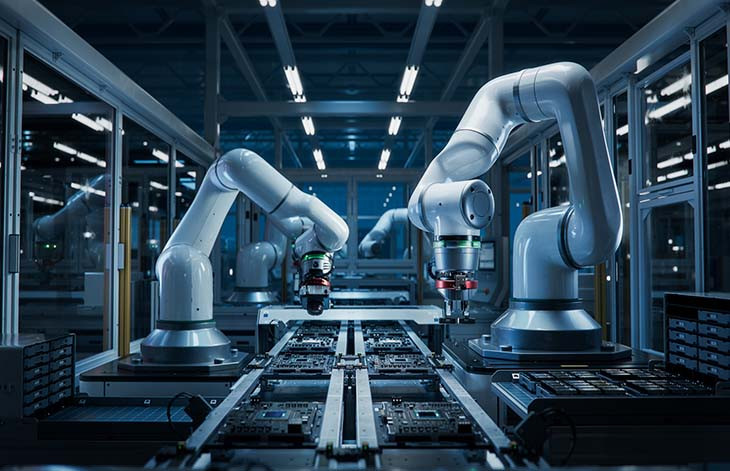
The facility in Érd is deliberately configured for high-mix, mid-to-high-volume assembly. A modular line setup enables rapid scaling based on customer demand, while configurable workstations allow teams to accommodate frequent new-product introductions without disrupting throughput. The manufacturing environment spans multiple dedicated lines for power-electronics and energy-storage products, covering both wall-mounted devices and larger cabinet systems.
Validation is deeply embedded in the process: firmware flashing, burn-in, and end-of-line functional testing are performed on every unit to safeguard field reliability. This test-heavy approach is complemented by digital traceability tools that track each assembly step in real time, supporting continuous improvement and fast root-cause analysis whenever it is needed.
In terms of capacity, REFU Hungary currently supports up to 40,000 storage devices annually (expandable to 60,000), as well as approximately 12,000 power-inverter units plus 3,000 electrical device per year. Planning remains flexible and depends on product mix—an important consideration for OEM customers navigating dynamic market conditions and evolving product portfolios.
Quality systems and end-to-end traceability
“Quality is embedded in every aspect of our operations,” REFU Hungary underscores. The company operates under ISO 9001 and ISO 14001 management systems, with regular audits to ensure compliance and drive continuous improvement. All processes adhere to quality standards and operational frameworks defined within the PRETTL Group.
A key pillar of the quality strategy is the ELAM digital system, which records every assembly step—capturing torque data, operator ID, and real-time process status. This granular view of production is complemented by an SAP-integrated MES environment, enabling end-to-end traceability across procurement, production, and logistics. The result is a closed feedback loop from incoming components to finished goods, equipped to support customer audits, regulatory requirements, and rapid issue resolution. To ensure long-term field reliability, every unit undergoes burn-in procedures and functional end-of-line testing, reinforcing the plant’s commitment to robust, repeatable quality.
Product and technology focus: manufacturing agility over IP
While core product development is led by REFU Elektronik or OEM partners, REFU Hungary concentrates on turning advanced designs into manufacturable, scalable, and compliant products for the European market. The differentiator here is manufacturing agility: the ability to handle both low- and high-volume production with equal discipline, supporting diverse product families—from hybrid inverters to energy-storage systems and EV charging.
This flexibility is strengthened by vertical and horizontal integration within PRETTL, which provides access to critical categories such as power-electronics components, housings, harnesses, and mechanical parts. In an era of supply-chain volatility, this structure yields a practical advantage: strategic component availability, dual-sourcing for critical parts, and close cooperation with sister companies. Combined with the group’s decades of power-electronics manufacturing expertise, it makes REFU Hungary a trusted partner for OEMs seeking to accelerate EU-based production without compromising on quality or compliance.
Supply-chain design for resilience
The supply-chain architecture supporting Érd is explicitly designed for resilience and flexibility. The team maintains an intelligent mix of EU-based suppliers and global technology partners, applying dual-sourcing strategies where components are critical. The aim is to balance lead times, cost, and availability while meeting customer and regulatory expectations around quality, traceability, and compliance. This approach not only stabilizes output in tight markets but also strengthens the business case for Made-in-EU products at a time when localization and risk mitigation are increasingly valued by energy-tech customers.
Sustainability and the GoZero framework
REFU Hungary’s sustainability work is aligned with GoZero, the corporate initiative of the PRETTL Group. The plant’s approach blends process efficiency, digitalization, and local collaboration. Digital tools—ELAM, SAP, and MES—help reduce rework, scrap, and excess material use; modular lines lower idle energy consumption and improve load balancing; and the site is steadily increasing the share of renewable energy in its sourcing mix. On the waste-management side, material separation, recycling, and packaging reduction are priorities. As a result, the site achieved a 40% reduction in total waste generation in 2025 so far, driven primarily by improved packaging reuse and recycling strategies. Logistics benefit from on-campus integration with sister companies, shortening transport distances and enabling just-in-time material flows that help curb CO₂ emissions across the value chain.
“We aim to be more than a factory — a long-term manufacturing and innovation partner.” — Gyula Virág, REFU Hungary
The philosophy is clear: responsibility covers not only what is manufactured, but how it is manufactured.
Markets, customers, and collaboration models
As a manufacturing partner, REFU Hungary primarily serves international OEM customers—many of whom want to expand or localize their presence in the European Union. Typical partners operate in energy storage, e-mobility infrastructure, and industrial power electronics, seeking flexible, high-quality, Made-in-EU manufacturing capacity.
The plant’s location near major Central and Western European transport corridors is a practical advantage—reducing logistics complexity and delivery times. Combined with short lead times, scalable production lines, and full digital traceability, this allows customers to adapt their product portfolios with confidence, without compromising operational stability. Alongside established OEMs, REFU Hungary is also open to early-stage innovators and startups; where vision and values align, the company is prepared to explore joint-development or joint-venture models to bring breakthrough technologies to market.
Recent investments and the 2026 roadmap
Between 2024 and 2025, REFU Hungary is investing to meet rising demand from existing and new OEM partners. The expansion includes new production and test lines, additional floor space and logistics capacity, and workforce growth and training, with headcount expected to increase by the end of 2025.
Beyond capacity, the company is planning a dedicated on-site energy-storage and solar-park investment. The project supports the GoZero sustainability goals of the PRETTL Group and will function as a testing and validation site for future product developments in collaboration with REFU Elektronik. It is also intended to serve as a training and education hub, strengthening Érd’s role as a long-term strategic base within the group.
Looking ahead to 2026, the focus is clear: scale production capabilities and deepen partnerships with OEMs driving innovation in energy, e-mobility, and sustainable infrastructure. The company’s efforts will center on European programs requiring Made-in-EU compliance, fast time-to-market, and full life-cycle traceability. The ambition is to be more than a factory—to act as a manufacturing and innovation partner for companies shaping the future of electrification.
Insights provided by Gyula Virág, Sales Manager, REFU Hungary.
Brochure: https://www.manufacturing-journal.net/articles/brochure/refu-hungary/