







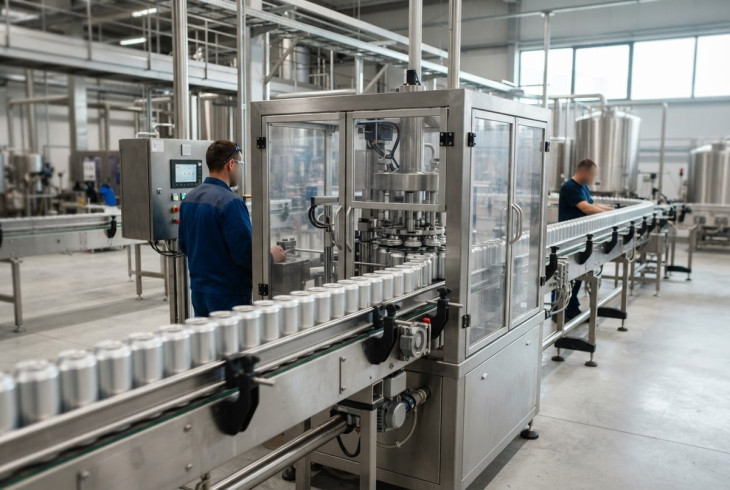
Beverage producers operating semi-automatic equipment often reach a point where throughput ceilings, labor demands, and quality inconsistencies begin to erode the advantages that made a smaller setup attractive in the first place.
Throughput and Speed
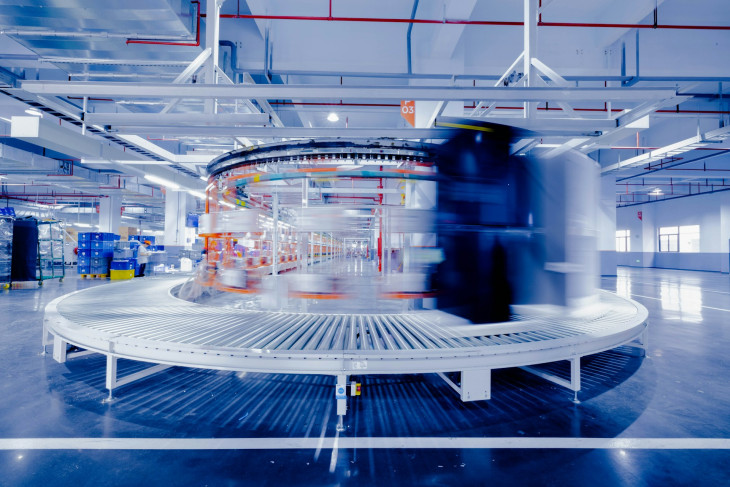
Semi-automatic lines typically operate between 15 and 30 cans per minute depending on operator skill and container format. Fully automatic systems commonly achieve 30 to 150 cans per minute, and high-speed configurations can exceed 300 cans per minute.
That gap becomes critical as production targets grow. Once a plant schedules additional shifts purely to compensate for slow packaging, the argument for automation becomes difficult to ignore. The comparison must account for the whole system – filling, seaming, coding, and conveyance – since a bottleneck at any one station limits the entire line.
Labor Cost and Quality Control
Semi-automatic canning requires consistent operator involvement at multiple points: managing can feeding, monitoring fill levels, assisting with lid placement, and handling downstream stacking. As throughput requirements increase, labor cost per unit rises rather than falls. Fully automatic lines shift operators toward monitoring and exception handling – a reallocation that compounds across every production run and SKU changeover.
Quality control is one of the strongest technical arguments for full automation. Fill levels on semi-automatic equipment depend partly on operator attention, and seam quality can vary with fatigue. Fully automatic systems apply consistent mechanical force on every can through sensor integration and PLC-controlled process management, reducing the risk of under-seams, over-seams, or incomplete seals. For breweries and carbonated soft drink producers, automated lines also deliver more consistent dissolved oxygen levels – a measurable advantage that directly affects shelf life.
Components and Infrastructure
A complete automatic canning line integrates a depalletizer, rinser, filler, seamer, date coder, conveyors, and downstream palletizing equipment. When evaluating industrial canning machines for a fully automatic line, engineers should assess not just the rated speed of individual machines but the integration logic between stations – buffer zones, reject handling, and the control architecture that ties the line together.
Automatic lines require dedicated power supply, compressed air at specified pressures, water or rinse supply, and – depending on product type – CO₂ or nitrogen for purging and counter-pressure filling. These utilities must be sized for peak demand and factored into the facility layout before equipment arrives. Floor conditions also matter: operations generate moisture and require level, sanitary surfaces with adequate drainage.
Trigger Points for Upgrading
There is no universal volume threshold that signals when a plant should automate. The strongest case emerges when multiple triggers align:
- Labor costs are rising relative to output: When adding shifts or headcount is the primary response to volume growth, automation becomes a structural solution rather than a capital expense.
- Quality complaints are increasing: A rise in seam failures, fill inconsistencies, or oxidation-related complaints points to process variability that semi-automatic equipment cannot reliably eliminate.
- Outsourced canning is consuming margin: Plants relying on mobile or contract canning pay a per-unit premium that, at sufficient volume, exceeds the annualized cost of an in-house line. Published examples from mid-size brewery operations suggest annual savings of $100,000 to $125,000 at around 2,000 to 2,500 barrels per year, with payback periods of 13 to 14 months on investments in the $120,000 to $135,000 range.
- SKU complexity is manageable: Fully automatic lines deliver the greatest efficiency advantage when running fewer SKUs at higher volumes. Plants with fragmented portfolios and frequent short runs may find that changeover time partially offsets the speed advantage.
- Packaging has become the bottleneck: If production planning is driven by packaging capacity rather than by brewing, mixing, or fermentation capacity, upgrading the canning line is the direct remedy.
Conclusion
For plants experiencing volume growth, labor pressure, or quality challenges, moving to full automation is often the most direct path to sustainable production economics. The throughput gap is real and measurable, the quality advantages are well established, and the financial case frequently supports automation sooner than managers expect. The key is to evaluate the decision against specific operational data and plan the transition from facility assessment through commissioning with the same rigor applied to any major production investment.