








Industries such as aerospace, automotive and health care need precision parts to keep essential equipment functional. These components traditionally required highly skilled workers to craft them, but artificial intelligence has changed things. AI-driven manufacturing gets excellent results for clients in tightly regulated sectors while offering many other benefits. How have companies applied it so far, and what opportunities exist for improving your work?
Overcoming Labor Shortages
Retirements, the time required to train new workers and job seekers’ unfavorable perceptions of production roles are among the primary factors causing persistent challenges in many facilities. No universal solutions exist, but some decision-makers have tackled workforce gaps with AI-driven manufacturing.
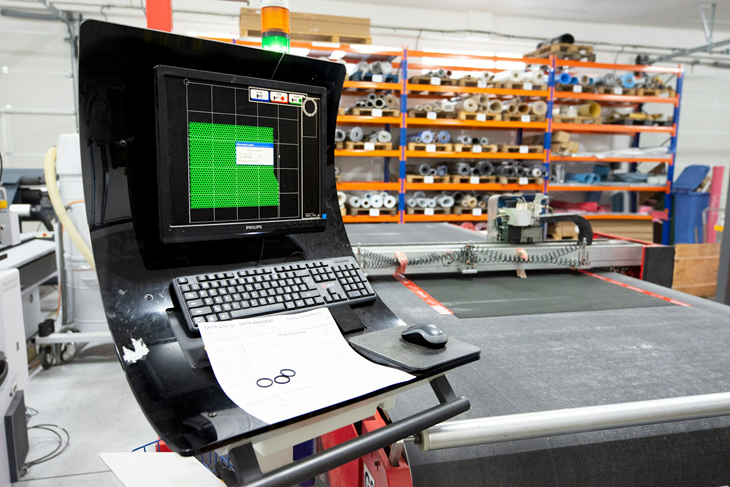
The leaders of MSP Manufacturing, an Indiana business making aviation parts according to submillimeter precision requirements, embraced that option after facing a shortage of programmers for computer numerical control equipment. The company’s CEO says it took employees from 90 minutes to an entire day to instruct a CNC machine to create a single part. The time-consuming nature became especially problematic when the facility experienced bottlenecks due to only having about three workers with the necessary skills.
After learning about an AI programming tool during a trade show visit, executives believed it could be a game-changer. They purchased and installed it, discovering the solution shortened 90-minute jobs to seven minutes. Workers needed another quarter hour to refine the AI’s work, but this new process still saved significant time. The CEO also clarified that the average duration shrank further as people got accustomed to the software.
This example shows how producers can maintain high quality and boost productivity. Those gains could keep costs down, letting brands pass savings onto purchasers. Parts requiring unusual tolerances, such as flatness exceeding .005 total indicator reading per inch, are more expensive than their less precise counterparts. When AI makes programming the machines that make these components easier, some manufacturers may continue giving loyal customers competitive prices, knowing they have already saved money through better internal processes.
Tightening Quality Control
Precision parts undergo stringent inspections to verify that they meet or exceed all stated parameters. Employees must then rework or discard those with shortcomings, depending on the extent of the flaws. Pinpointing root causes also becomes essential, especially if machine-related problems are the culprits. Not addressing the issues soon enough could cause substantial profit losses and decrease customer confidence.
AI excels at detecting deviations from baselines, and this characteristic makes it a good option for tool performance analyzers. These systems include high-tech sensors integrated into CNC milling machines. Even minor amounts of wear can cause dimension-related discrepancies in small-diameter parts. Algorithms perceive tiny changes in how tools affect surfaces, warning operators of potential issues much earlier.
These tools can also monitor overall tool condition and recommend when to perform maintenance, replace a worn instrument with a new one or take other steps to maintain high quality throughout production. Ongoing assessments use real-time data and historical patterns to recognize unusual aspects and prompt operators to investigate.
Quality-enhancing AI applications also target organizations’ sustainability initiatives, turning more production attempts into usable products that satisfy customers rather than ending up in dumpsters as scrap material. Solid waste generation exceeds 2 billion metric tons annually, highlighting the improvement potential.
Once machine operators understand why precision parts fail inspections, they can examine each process step to find issues. AI-driven manufacturing solutions can help by ingesting and analyzing vast amounts of data to reveal trends.
Bringing AI-Driven Manufacturing to Microfactories
Long lead times and supply chain shortages could encourage some buyers of precision components to source them from nearby entities rather than distant factories when possible. Most people think of production facilities as sprawling sites, but a Canadian-based business called Watch Out upends that perception.
Its model brings manufacturing to container-sized cells that run with minimal human oversight. The company’s leaders think this option can facilitate domestic production and tackle critical labor shortages. Executives developed the first microfactory to make precision-tuned parts, including aerospace fasteners. Three process modules handle, create and inspect the components.
The system performs numerous autonomous checks, including some to verify geometries and part positions align with relevant model data. All these microfactories connect to an AI communication tower that tells workers which tools to take to individual cells, and tags detect if employees load instruments into them. Internal optical cameras show tool and component orientations in real time, triggering the fabrication module to update its movements when necessary.
Because of all the sensors gathering data during the process, supervising parties typically know if things go wrong long before a part reaches the inspection phase. Digital controls in each cell respond to the information feed, taking corrective actions to substantially reduce flaws. The adaptability and immense control over every step make this AI-driven manufacturing example inspiring for other innovators interested in applying the concept to precision products.
Proving the Potential of AI-Driven Manufacturing
These exciting examples emphasize the benefits of remaining open to how advanced algorithms and control modules could optimize the production of precision components. Besides viewing the case studies in the context of your work, consider how well-chosen solutions might help you address challenges and impress new or current clients.