





1. Syensqo is making its debut at K 2025 under a new name. How significant is this moment for the company and its future positioning?
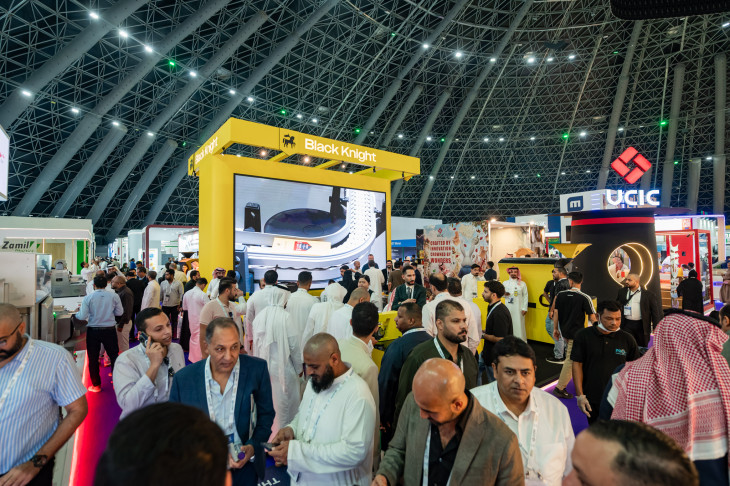
This year marked an important milestone for Syensqo as we made our debut at K 2025 under our new identity. It was exciting to be back at the world’s leading trade fair for plastics and rubber, this time with a renewed vision and energy that truly reflected who we are today — an innovation-driven company focused on solving some of the world’s toughest material challenges.
We’ve always been a science- and innovation-led organization, and that hasn’t changed — in fact, we’re doubling down on that mission. At K 2025, we showed how our advanced materials deliver exceptional performance in the most demanding conditions, and how they enable breakthrough technologies across key industries.
We showed practical examples of this — from materials that improve the efficiency of e-motors and power systems, to ultra-pure polymer chemistry supporting next-generation semiconductors, to high-performance solutions for medical devices that push the limits of safety and reliability. These are areas where the world needs new answers, and where Syensqo is at the leading edge.
So for us, this debut wasn’t just about a new name — it was about showing what Syensqo stands for: performance, innovation, and a deep commitment to advancing humanity through science.
2. Your specialty polymers portfolio addresses a wide range of applications, from e-motors and compressors to healthcare and semiconductors. Which areas are currently the fastest-growing, and why?
Indeed our portfolio is designed to help our customers solve the toughest challenges across multiple markets.
In the Electronics space, we’re seeing strong growth with our new NFS (fluorosurfactant free using our proprietary non-fluorosurfactant technology) Tecnoflon® portfolio for semiconductor applications. This market-first product portfolio is designed to deliver superior performance under extreme process conditions — like high temperatures and plasma exposure — that are essential for advanced chip designs powering AI and high-performance computing. Our latest introduction, unveiled at K 2025, features a high-temperature-curing NFS grade that delivers the performance needed for these leading edge chips while also addressing a key industry priority: eliminating fluorosurfactants from the semiconductor supply chain.
In our Life Solutions area, we’re seeing strong growth for our sulfone materials in advanced filtration — from hemodialysis to water treatment — driven by the superior in-use performance of both Udel® PSU and Veradel® PESU. At the same time, there’s clear momentum toward our new ECHO grades, as customers increasingly seek circular, lower-carbon solutions without compromising on quality. A great example is our partnership with Nitto, where our Udel® PSU ECHO, made with certified non-fossil feedstock, is replacing traditional fossil-based polysulfone in water treatment membranes — combining high performance with real progress toward circularity.
As the automotive electrical vehicle industry transitions to high voltage (800V+) architectures, the need for materials that can deliver thermal resistance, superior dielectric strength, and long-term reliability has never been greater. Our KetaSpire® PEEK materials for magnet wire and slot liners not only enable these performance gains, but also drive improved system efficiency and lower overall costs. By pushing the limits of what’s possible in e-motor design, Syensqo is helping OEMs and Tier suppliers accelerate the shift to more compact, efficient, and powerful electric drivetrains.
3. Syensqo recently won top honors at the Altair Enlighten Awards with Horse Powertrain. Could you tell us more about this achievement and its importance for lightweighting and sustainability?
We’re thrilled to have received the 2025 Altair Enlighten Award with Horse Powertrain — it’s a great example how we work closely with our customers to help them bring their novel ideas to life with our innovative solutions. The winning innovation leverages Syensqo’s Amodel® PPA to deliver a breakthrough in hybrid drivetrain efficiency. Horse Powertrain’s adoption of this advanced thermoplastic enabled a novel e-motor cooling design, resulting in a remarkable 47% weight reduction and 36% cost savings compared to traditional metal solutions. The metal-to-plastic conversion also allows for part integration and streamlined high-volume assembly through injection molding, laser welding, and snap fits. Improving our customers manufacturing process and ultimately lowering the carbon footprint across the entire process. For us at Syensqo, it’s proof that advanced materials can help the automotive industry move toward a lighter, smarter, and more sustainable future.
4. Recycling and circularity are becoming increasingly critical. How is Syensqo advancing its innovative recycling technology for sulfone polymers?
At Syensqo, we see recycling and circularity as absolutely essential, not optional. That’s why we’ve developed a proprietary chemical recycling process for our sulfone polymers such as our Udel® PSU, Radel® PPSU, and Veradel® PESU. This technology can depolymerize post-industrial and post-consumer waste back into purified monomers, which are then reused indefinitely to produce new high-performance materials — without any loss of quality or performance. By closing the loop in this way, we’re reducing waste, lowering carbon footprint, and helping customers boost recycled content in demanding applications, from healthcare to aerospace. It’s a major step toward true circularity in high-performance polymers.
In addition to our work with sulfone polymers, Syensqo is also advancing circularity in polyolefins. Our next-generation polymer stabilizers are designed to maintain performance and durability in both virgin and recycled materials, allowing manufacturers to increase the share of recycled content without compromising quality. By supporting circularity in both high-performance polymers and commodity plastics, we’re helping to make sustainability achievable across the entire plastics value chain.
5. Hydrogen technologies and hydrogen-powered mobility are among the most discussed topics at K 2025. What role does Syensqo play in enabling this transition?
At Syensqo, we play a key role in enabling the transition to hydrogen-powered mobility by providing the advanced materials and expertise that make hydrogen technologies efficient, reliable, and developed for next-generation applications.
We offer a broad portfolio of specialty materials, including ionomers and other high-performance polymers that are essential across every stage of hydrogen producing and consuming systems. Used in membranes, electrode binders, gaskets, diaphragms, cell frames, and end plates, as well as in critical areas such as thermal management and air systems, our materials improve efficiency, durability, and safety while ensuring reliable performance across diverse applications.
In April 2025, we expanded this portfolio with the launch of HYRA™, our dedicated range of hydrogen-grade polymers engineered for exceptional performance in hydrogen environments. The first HYRA materials — based on Radel® PPSU and Udel® PSU — combine strong chemical resistance, low ion leaching, and long-term mechanical stability, ensuring consistent operation under demanding conditions.
Our vision comes to life through Climate Impulse, a pioneering mission to fly non-stop around the world powered entirely by green hydrogen. As the project’s main technology partner, Syensqo provides the advanced materials — from lightweight composites and adhesives to insulation solutions — that enable safe hydrogen storage and efficient energy use. This collaboration exemplifies how science and partnership can push the boundaries of clean aviation and accelerate progress toward a carbon-neutral future.
6. Beyond product innovation, how does Syensqo approach sustainability in its operations and supply chain?
At Syensqo, sustainability is part of how we create value and grow our business. It strengthens our performance, drives innovation, and makes us more resilient. We see it as a source of competitiveness — a way to deliver solutions that are better for our customers, for society, and for the planet.
We are advancing toward carbon neutrality across our operations by 2040, with validated 2030 targets to reduce our greenhouse gas emissions by 42% in our own activities and by 25% across key areas of our value chain, compared to the 2021 baseline. Today, three-quarters of our sites already run on renewable electricity, and we have achieved half of our 2030 emissions-reduction goal.
In addition, by 2030, we aim to achieve a 20% average reduction in freshwater withdrawal compared with the 2021 baseline at sites exposed to water availability challenges.
Finally, more than 80% of our innovation pipeline focuses on sustainable solutions, and 16% of our sales already contribute to circularity — a share we aim to grow significantly by 2030. From advanced materials for electric vehicles and green hydrogen to bio-based and recyclable polymers, our technologies are helping entire industries transition to more sustainable models.
Sustainability at Syensqo also means responsibility — operating safely, respecting people, and partnering with communities and suppliers to create lasting value.
7. Looking at the coming years, what are Syensqo’s strategic priorities to strengthen its position as a leader in specialty polymers globally?
At Syensqo, our focus over the next few years remains on helping the world transition to cleaner energy, smarter mobility, better living, and a more digital economy. With battery costs dropping sharply and EV adoption accelerating, our advanced polymers are playing a greater role in making cars lighter, safer, and more efficient. At the same time, the explosion of computing power driven by AI and data centers is creating new demands for our materials in thermal management, electronics, and cooling — all critical to keeping digital infrastructure running more sustainably and efficiently. How do we make that happen? By innovating — and co-innovating. With a customer-driven mindset and a strong scientific foundation, we align our expertise with the evolving needs of industries and society. Through our global Customer Innovation Centers, we work hand in hand with customers, partners, and stakeholders to co-create market-leading solutions that truly make a difference.
We’re also making sure our growth is balanced and responsible. That means building a strong regional presence in Europe, North America, and Asia to stay close to our customers and ensure resilient supply chains, while continuing to invest in bio-based and recyclable materials that advance circularity. Innovation, sustainability, and customer collaboration remain at the heart of everything we do. By combining these strengths, we’re positioning Syensqo not just as a leader in specialty polymers, but as a partner in sustainable growth.
Biography:
Peter Browning
President GBU Specialty Polymers at Syensqo
Peter has held different leadership positions within Solvay, now Syensqo with a strong track record, consistently driving growth and profitability.
He previously served as President of the Peroxides global business unit deploying H2O2 megaplant licensing whilst engaging in strategic restructuring in Europe and Asia. As President of the Aroma Performance global business unit, Peter successfully refocused the business on natural ingredients to turn around the division’s economic performance. As General Manager of Engineering Plastics, he led the business to successive record profit years leveraging innovation and geographical expansion before playing a pivotal role in the division's sale to BASF at a highly attractive valuation. He holds a degree in Chemical Engineering from Aston University and an MBA from London Business School.