












Modern aircraft engines operate in conditions that would quickly damage unprotected metal components. To withstand extreme heat while maintaining efficiency and reliability, manufacturers rely on advanced thermal protection systems that combine specialized materials, precision surface engineering and thermal spray technologies.
To create an effective thermal shield, engineers must consider operating temperatures, oxidation resistance, thermal cycling and compatibility with the underlying alloy to maximize component life. Manufacturers evaluating the best thermal spray coating for aerospace engine components operating at extreme temperatures must understand how these factors interact to lay the foundation for a successful coating strategy.
Why Aerospace Engines Need More Than Heat-Resistant Alloys
Modern gas turbines convert the energy released during fuel combustion into mechanical power. To improve engine performance and fuel efficiency, manufacturers continue designing turbines that operate at higher inlet temperatures. In general, increasing the turbine inlet temperature allows a gas turbine to generate more power while improving its overall thermal efficiency. The trade-off is that critical engine components are exposed to temperatures beyond the limits their base materials can withstand.
Because heat-resistant alloys alone cannot endure these extreme conditions over long service periods, aerospace engines rely on multiple thermal management strategies. Internal cooling passages, advanced airflow designs and thermal barrier coating for aerospace engine components work together to protect turbine blades, vanes and other hot-section parts from excessive heat. This integrated approach helps maintain reliable performance while extending component life in demanding operating environments.
How Thermal Barrier Coatings Actually Work
A thermal barrier coating (TBC) is an engineered multilayer system in which every layer performs a specific function. A typical aerospace TBC consists of:
- A high-performance nickel-based superalloy substrate
- A metallic bond coat that promotes adhesion while resisting oxidation
- A ceramic topcoat, commonly yttria-stabilized zirconia, that provides thermal insulation
The ceramic layer slows heat transfer into the underlying metal, allowing the substrate to operate at significantly lower temperatures than the surrounding combustion gases. Meanwhile, the bond coat forms a stable oxide layer that protects the substrate from oxidation while maintaining adhesion between the metal and ceramic layers.
According to the National Aeronautics and Space Administration (NASA), "these coatings can increase engine operating temperature, reduce cooling, lower emissions, and improve engine efficiency and reliability." That combination allows engine designers to pursue greater efficiency without exposing expensive components to damaging temperatures.
Three Characteristics That Define a High-Performance Thermal Shield
Not every coating performs equally in aerospace applications. Manufacturers evaluating thermal barrier coating for aerospace engine components should focus on three critical performance characteristics.
High Temperature Stability
A coating must maintain its microstructure after thousands of hours of exposure to elevated temperatures. Some ceramic materials gradually change structure during prolonged service, reducing their insulating capability or increasing their susceptibility to cracking. Stable ceramic compositions preserve their protective properties even under repeated thermal loading. High-temperature stability becomes increasingly important as aerospace engines operate closer to material limits.
Thermal Barrier Performance
The primary objective of a thermal barrier coating is to reduce heat transfer. Lower thermal conductivity means less heat reaches the underlying alloy, helping maintain acceptable metal temperatures even as combustion temperatures continue increasing. NASA notes that these coatings are specifically designed to provide thermal protection for metallic superalloy components operating at surface temperatures approaching 1,200° Celsius.
Oxidation Resistance
Heat alone does not destroy turbine component coatings. At elevated temperatures, oxygen aggressively reacts with exposed metals, weakening the substrate and reducing coating adhesion over time. An effective bond coat slows this oxidation process while providing a durable interface between the ceramic coating and the underlying alloy. Maintaining that interface is critical for extending coating life through thousands of thermal cycles.
Why Choosing Between Coating Systems Is So Challenging
One of the biggest frustrations aerospace manufacturers face is comparing coating technologies based solely on published specifications. Two ceramic coatings may appear nearly identical on paper while performing very differently inside an operating turbine engine. Performance depends on numerous application-specific variables, including:
- Operating temperature
- Heating and cooling rates
- Component geometry
- Gas flow characteristics
- Mechanical loading
- Cooling strategies
- Substrate alloy selection
- Coating thickness
- Deposition process
Because these variables interact, selecting extreme-temperature coating systems based solely on material properties often leads to suboptimal results. Instead, engineers rely on application-specific testing, thermal cycling evaluations, oxidation studies and burner rig testing to assess how a coating system performs under real operating conditions. Evaluating the coating alongside the component's cooling strategy provides a more complete understanding of its long-term durability and overall performance.
Why Thermal Barrier Coatings Fail Before Their Expected Service Life
Even advanced coating systems eventually degrade, but premature failure is often linked to factors beyond the ceramic topcoat itself. Understanding these failure mechanisms helps manufacturers improve both coating selection and maintenance planning.
One of the most common issues is thermal cycling. Every engine start, climb, cruise and shutdown subjects coated components to repeated expansion and contraction. Because the ceramic coating, bond coat and substrate expand at different rates, stresses gradually build within the system. Over time, these stresses can lead to cracking or coating spallation, where portions of the ceramic layer separate from the underlying surface.
Oxidation also plays a significant role. Although bond coats are designed to form a protective oxide layer, excessive oxide growth can eventually weaken the bond between layers. Once adhesion begins to deteriorate, the coating becomes more vulnerable to cracking during subsequent thermal cycles. Additional causes of premature coating failure include:
- Foreign object damage from debris entering the engine
- Erosion caused by airborne particles
- Improper coating thickness or inconsistent application
- Surface preparation issues before coating deposition
- Selecting a coating system that does not match the operating environment
NASA warns that the deterioration of thermal barrier coatings can have consequences beyond component wear. "Degradation or loss of TBCs or EBCs can lead to decreases in engine performance, shorter component lifetimes, and higher safety risks." For aerospace manufacturers, these risks reinforce why coating selection should be treated as an engineering decision rather than simply a procurement exercise.
Why Surface Engineering Matters
Surface engineering enhances the properties of metallic components, enabling them to perform better in demanding operating environments. Rather than changing the entire part, it modifies the surface to improve characteristics such as mechanical strength, wear resistance, corrosion protection and durability, making it a valuable approach for aerospace applications.
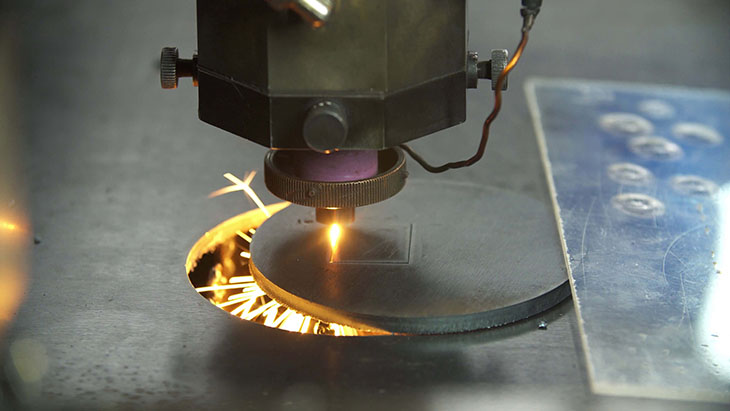
These improvements can be achieved using a range of physical and chemical techniques. Physical methods, including thermal spray coatings, physical vapor deposition, chemical vapor deposition and laser surface engineering, tailor properties such as hardness and surface texture.
Chemical processes, such as electroplating and electroless plating, can further improve corrosion resistance and other surface characteristics. By selecting the right combination of materials and surface engineering processes, manufacturers can develop components that withstand extreme operating conditions while supporting longer service life.
How Fisher Barton Helps Manufacturers Build Longer-Lasting Components
When coating performance depends on more than just the ceramic itself, partnering with an experienced surface engineering specialist offers a significant advantage. For manufacturers evaluating the best thermal spray coating for aerospace engine components at extreme temperatures, the decision often extends beyond coating chemistry to include materials expertise, manufacturing processes, and application-specific engineering.
For over 100 years, Fisher Barton has combined materials science, precision manufacturing, heat treating, and proprietary thermal spray technologies to help original equipment manufacturers (OEMs) improve component performance across demanding industries, including aerospace. Reflecting this application-focused approach, the brand explains that "choosing the right thermal spray coating and optimum coating process technique is key to realizing the full benefits of this technology."
Rather than supplying coatings alone, the company works collaboratively with customers to evaluate base materials, operating environments, manufacturing processes, and expected service conditions before recommending an appropriate surface engineering solution. That materials science perspective helps manufacturers avoid a common challenge — selecting a coating based solely on published specifications rather than real-world operating requirements.
Fisher Barton's capabilities include:
- Advanced thermal spray coatings and surface engineering
- Heat treating and metallurgical expertise
- Precision machining for complex components
- Rapid prototyping and OEM-focused manufacturing
- In-house applied research and development
- Support for aerospace, oil and gas, construction, food processing, and other demanding industries
The company's quality systems further support aerospace programs. In addition to maintaining ISO 9001 certification, Fisher Barton also supports projects requiring International Traffic in Arms Regulations compliance, giving aerospace customers additional confidence when working on controlled programs.
As supply chain uncertainty continues to influence manufacturing decisions, many OEMs are also seeking trusted domestic suppliers capable of supporting single-source or dual-source production strategies. Fisher Barton's broad manufacturing capabilities and vertically integrated expertise help address those evolving sourcing priorities while keeping engineering collaboration at the forefront.
What's Next for Aerospace Thermal Protection?
As aerospace engines continue operating at higher temperatures, thermal protection technologies are advancing to improve durability, efficiency and reliability. NASA is developing new coating materials and diagnostic techniques that help protective coatings withstand more demanding operating environments while enabling engineers to monitor their condition throughout service. These innovations aim to support higher engine temperatures without compromising component life.
Researchers are also exploring advanced coating architectures and manufacturing approaches that enhance thermal stability and resistance to harsh combustion environments. Combined with improved cooling strategies and material selection, these developments are helping shape the next generation of aerospace thermal protection systems.
Frequently Asked Questions
Here are answers to common questions about thermal barrier coatings for aerospace applications.
What is a thermal barrier coating?
A thermal barrier coating (TBC) is a multilayer system that insulates critical aerospace components from extreme heat, improving engine efficiency and extending component life. NASA notes that TBCs also support higher operating temperatures and improved reliability.
Why do thermal spray coatings matter in aerospace?
Thermal spray coatings help protect turbine blades, vanes, combustor liners and other hot-section components from heat, oxidation and wear, reducing the risk of premature failure.
What should manufacturers look for in a coating system?
The right solution depends on operating temperature, thermal cycling, substrate compatibility, oxidation resistance and application-specific performance data rather than material specifications alone.
Engineering Thermal Protection for Long-Term Performance
Creating an effective thermal shield requires more than applying a ceramic coating. Long-term performance depends on selecting extreme temperature coating systems that match the application's operating conditions while balancing thermal insulation, oxidation resistance and durability. By taking a system-level approach to materials, surface engineering and testing, aerospace manufacturers can improve component reliability and support more efficient engine performance.