











There was a time when the average computer needed an entire room. As technology has advanced and the components used inside most electronics have become more capable, devices have become significantly smaller. Crucial to that advancement for all forms of technology — from industrial systems to medical-grade devices and consumer products — are printed circuit boards (PCBs), which have also grown increasingly thinner, smaller and more capable.
New fabrication techniques are enabling a wave of ultra-small, incredibly thin manufactured parts. Miniaturization is the next generation of shrinking components, and it’s empowering unprecedented design change through integration and application-specific integrated circuits (ASICs). New fabrication solutions reduce power draw, enhance performance and capabilities, and shrink overall size and weight.
The Benefits of Miniaturization
Miniaturization delivers the core benefit of smaller components overall. However, it also offers other advantages that make it a significant transformation for the world of electronics and engineering, including:
- Reduced power consumption, thanks to reduced trace lengths on PCBs and capacitive loading improvements.
- Significantly improved electromagnetic interference and signal power through better materials, tight routing and integrated shielding.
- Lower production costs through reduced ASICs and Bill of Materials for boards, embedded passives, and more efficient development processes.
- Improved flexibility and space efficiency, enabling unique applications where components are packed closer, PCB space is optimized, and more lightweight and compact solutions are possible.
- Enhanced functionality thanks to more powerful components and tracing opportunities, leading to more capable options despite smaller sizes.
- Lowered thermal stress through more intelligent designs, more room for thermal structures, reduced clutter and better shielding.
These changes enable the industry to keep pace with the increasing demands of today’s devices, particularly in fields where tolerances are a significant concern, such as those involving medical-grade or industrial devices.
Novel fabrication techniques are pushing engineering practices to the cutting edge. When combined with other technological advancements, such as industrial 3D printing, they make achievements, like nanofabrication or micro-robotics, possible.
A Real World Example of Efficiency Improvements: Automatic Nesting and Mirrored Parts
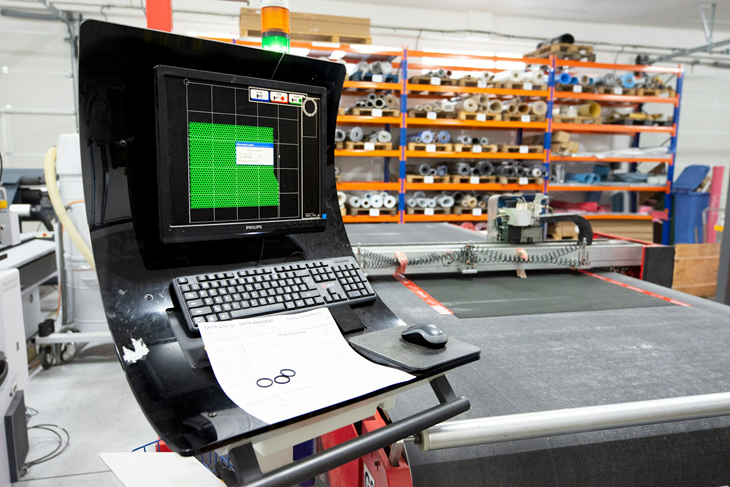
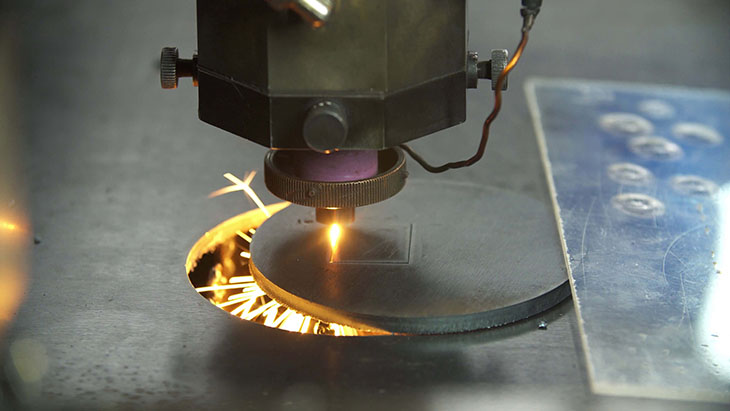
When printing boards, components and other manageable parts, nesting is used to optimize sheet-based or flat materials. Rather than cutting a single board or shape out of one sheet, leaving tons of waste, the parts are arranged in a way that maximizes the use of the sheet. For a long time, this was done manually using software, and it would take programmers significant amounts of time to arrange even a single configuration of parts.
Through automated nesting, manufacturers can save upward of $1 million annually, which, alone, is an excellent benefit. However, considering the reduced materials waste, lowered production costs and the time saved, these benefits compound, just like they do for miniaturization as a whole. Not to mention, the smaller the designed parts or PCBs are, the more that can fit on a single sheet, stretching cost savings further.
What Has Actually Changed in Fabrication?
Photolithography, mechanical and laser drilling, direct imaging, and etching are all common techniques used to design and build PCBs, with extremely tight tolerances becoming increasingly restrictive as each component shrinks. These techniques are being improved and utilized in new ways. Sub-20 µm traces or ultra-HDI solutions were previously difficult to produce with etching alone. However, they are now possible through semi-additive processes, direct imaging and other advanced development measures.
Materials science can’t be overlooked. Conventional FR4 substrates, despite being the most common, are now being replaced by multifunctional or advanced composites, such as polyimide, liquid crystal polymers and laminates. Developed with more expansive layers, curved and non-traditional surfaces, and even flexible designs, especially in wearables, they’re just as crucial to PCB design and growth as shrinking sizes.
The smallest transistor to date, a one-nanometer gate transistor, was produced, thanks to carbon nanotubes and molybdenum disulfide, which could potentially extend Moore’s Law. This is one of the first times molybdenum disulfide was used in transistor design. PCB and parts manufacturers are working smarter and more efficiently than ever, and this expertise is being integrated into today’s technologies.
Technologies like artificial intelligence — which is revolutionizing PCB layouts and fabrication — are also helping to facilitate miniaturization. These tools can help optimize and find smarter routing, thermal layouts and even more unexpected materials solutions through algorithmic training. Meanwhile, photonic integration, the concept of embedding optical traces, and additive manufacturing, also known as 3D printing, offer even more considerations and improvements.
Welcome to the Next Wave of Boards and Circuitry
As a natural progression in the dynamic field of PCB design, miniaturization offers more than just smaller components — it unlocks improved performance, greater efficiency and entirely new applications. This evolution is driven by advances in fabrication, from revolutionary new methods, like additive manufacturing and direct imaging, to the significant enhancement of traditional processes like etching. Together, these techniques are what make the next wave of compact, powerful electronics possible.