









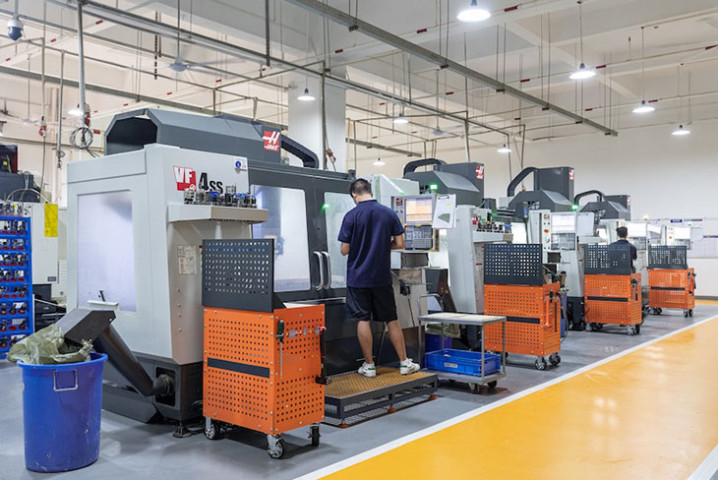
When it comes to manufacturing humanoid robots, whether it's rotary joints, hands, or various transmission components, these parts all need to handle complex motions and torque, as well as precise geometric structures and strict assembly tolerances. So for these kinds of small batch custom parts, CNC precision machining is usually a more reliable and controllable manufacturing method. WayKen CNC integrates multi-axis machining, rapid production processes, and coordinated production management to support the manufacturing of complex medical robots and surgical equipment.
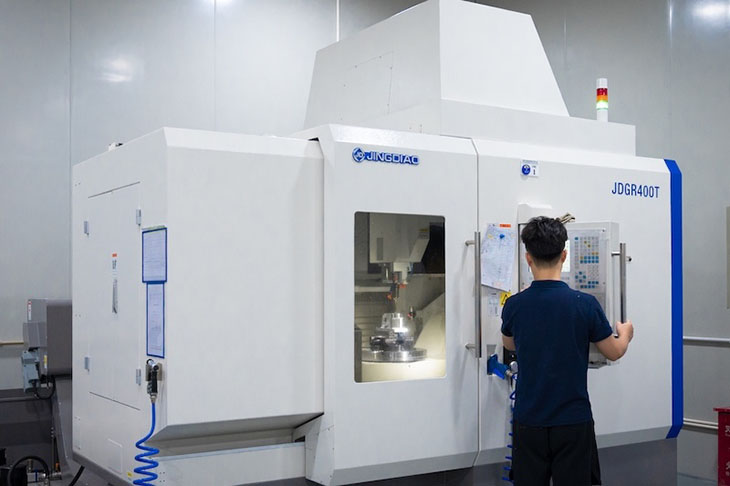
5-Axis CNC Strategies for Articulated Arm Components
Articulated arm medical component parts typically have thin-walled, free form shapes, interior intersecting passageways, and high precision assembly hole locations with a very limited amount of available machining area.
A recent articulated arm project of WayKen produced some parts with an overall size of 30 x 31.5 x 20mm. The thinnest walls were 0.079mm – 0.114mm. Thin-walled CNC aluminum parts at such a small scale are extremely susceptible to clamping forces, cutting vibrations, and stress releases from machining operations.
WayKen machining engineers employ flexible fixtures to support and protect weak structural areas when machining thin-walled aluminum parts, and optimize their machining sequence to minimize the risk of part deformation. Rough machining will retain controlled stock allowances prior to semi-finish and finish machining. Staging the process will provide sufficient stability on the part prior to the completion of critical tolerance feature machining.
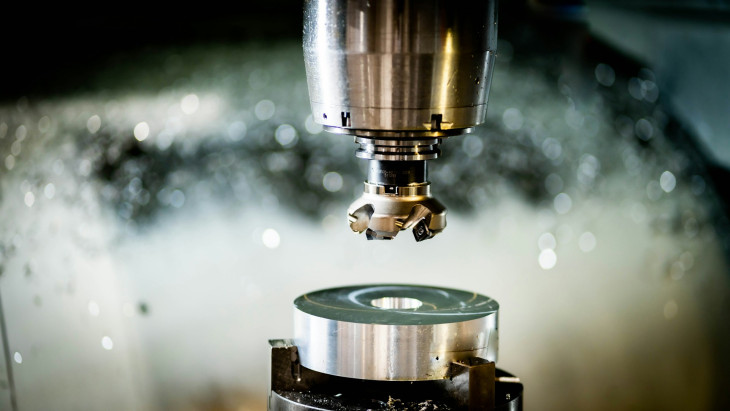
5-axis CNC machining provides a significant reduction in setup related tolerance stack up when machining high precision holes and other assembly interfaces. 5-axis machining allows for the simultaneous machining of multiple surfaces in one setup thereby providing consistent datums for all intersecting features, thus, providing improved parallelism, concentricity and positional accuracies.
Additionally, complex internal channel geometries and inclined hole locations may need special consideration regarding tool access. Utilizing long reach tools, 5-axis directional drilling, and CAM based tool path simulations help to prevent collisions and preserve the surface quality of parts being manufactured in confined geometries.
Vacuum Casting Technologies for Medical Device Casing
Wayken CNC machining services are available to support the vacuum casting of medical device products using silicone mold and polyurethane materials, especially where the production of telemedicine devices, handheld medical devices and robotic housing units are concerned. Polyurethane materials can mimic the properties of ABS, PC, rubber-like, and clear medical components. Unlike steel tooling, vacuum casting reduces the cost of tooling required for the production of medical devices.
It is important of medical device casing surfaces. Additional secondary finishing processes; such as, texture reproduction, paint applications, silk screen printing, and soft touch coating applications can be utilized to simulate production level cosmetics during pilot manufacturing.
The use of CNC machined structural components combined with vacuum cast external encasements can shorten prototyping cycle times and keep development costs under control when building complex medical robotics.
Production Management Process for High-Mix Low-Volume (HMLV) Medical Parts
The primary focus of HMLV manufacturing is on the ability of the manufacturer to respond rapidly to changes from engineering review, provide flexible scheduling and provide process traceability of the part variations.
A key area that affects the manufacturing process of medical robots is the management of production activities beyond machining. Examples include tracking of materials, CAD revision control, fixture standardization, inspection planning and machining documentation. All these areas have an effect on how well the assembly will be consistent and repeatable during production.
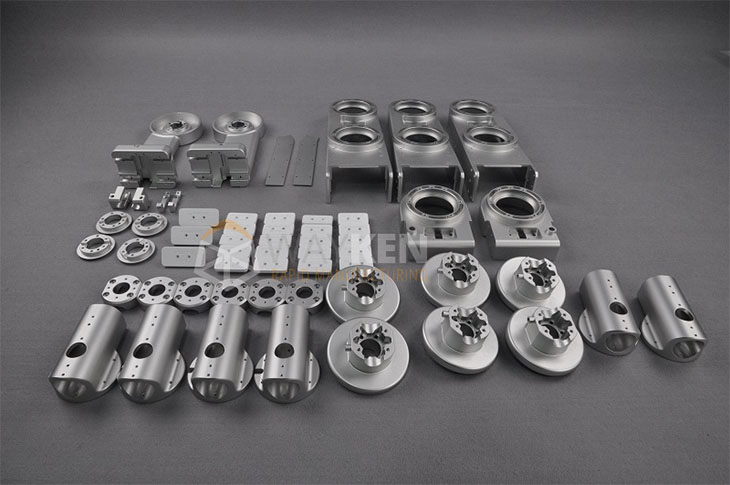
WayKen provides low-volume machining support through integration of CNC machining, surface finishing, assembly support and inspection work flows into a coordinated manufacturing process. This eliminates potential outsourcing delays associated with each iteration of prototype development, thus enabling engineering revisions to enter into production faster.
One such challenge with producing HMLVs is the consistency among all the part variations that can be accomplished in the least amount of time during setup changes. In order to attain higher efficiency in their production, Wayken ensures standardization of datum points in fixtures, along with validating machining parameters for particular component families before programming them into work flow. Critical dimensions like bores, threads, and thin-walled sections are checked with CMM, height gauges, pin gauges and micrometers after previous machining operations and before beginning the next machining process.
The reason why strict quality control standards are maintained for medical components is because most of these components determine the accuracy and precision of a robotic system's movement and positioning as well as its handling. Quality control measures are necessary since it entails first article inspection reports (FAIR), in process inspection, and revision-controlled machining documentations. These measures verify that prototype-validated parts remain dimensionally accurate, assembled correctly and geometric tolerance compliant throughout subsequent low volume production phases.
Conclusion
The production of components for robotic devices in the medical field requires more than the capability of machining alone. Thin-wall structures, complex geometries, and strict assembly tolerances all demand stable process control and flexible production management. By utilizing multi-axis machining, vacuum casting, and effective HMLV manufacturing techniques WayKen machining delivers reliable low-volume solutions for complex medical robotic systems, precision structural components, and surgical device development.