









Manufacturing bottlenecks are not always where production teams expect them to be. A machine running at full capacity may draw attention, while the actual constraint sits elsewhere in the production process. Recurring queues and missed targets can point to a problem, but they do not always reveal its root cause.
Adding labor or equipment may seem like the fastest solution. However, extra capacity can increase costs without improving overall throughput when teams address the wrong part of the process. By combining production data with observations from the floor, manufacturing leaders can locate constraints, identify their causes and make targeted changes that improve flow.
Why the Most Visible Production Delay May Not Be the Real Bottleneck
A visible production delay does not always reveal the true bottleneck. Work in process (WIP) may accumulate at one workstation because an earlier step produces uneven output. Likewise, an idle machine may point to material shortages or inefficiencies elsewhere rather than a problem with that station.
Upstream variability can leave downstream processes overwhelmed at one moment and starved for materials at another. Value stream mapping helps manufacturers see these relationships by showing how work moves through core processes. It can also reveal where labor, materials or other resources are being used inefficiently.
Real-time production data and analytics provide another layer of evidence. Real-time production data and analytics provide another layer of evidence. They can support cost-reduction efforts by helping manufacturers monitor performance, evaluate operations and identify areas for improvement that may be difficult to assess through floor observations alone. By examining system throughput and the relationships between steps, manufacturing leaders can focus on the constraint that is actually limiting production.
1. Follow the WIP to Locate Constraints
Persistent WIP accumulation can help production teams determine where flow begins to break down. Growing queues ahead of the same operation may point to a process that cannot keep pace with incoming work. Downstream equipment that regularly waits for material can provide another clue.
Teams should compare queue levels across shifts, product types and production runs instead of relying on a single observation. Recurring WIP buildup also carries financial and operational consequences. Excess inventory increases carrying costs and hides production problems that need attention.
For these reasons, manufacturers should investigate repeated WIP accumulation instead of treating buffer inventory as a normal part of production. However, WIP alone does not confirm where the underlying constraint sits. Comparing these patterns with cycle-time and downtime data can provide a clearer picture of what is restricting flow.
2. Separate Capacity Constraints From Process Problems
Adding equipment or labor may increase capacity, but it will not solve every bottleneck. Manufacturing leaders should first determine what is reducing usable capacity. Otherwise, the investment could add costs while leaving the underlying problem in place.
Common causes generally fall into several categories. Equipment problems include speed losses and short stops, while process issues may involve long changeovers or poor sequencing. Material shortages, skill gaps and quality problems, such as scrap and rework, can also restrict flow.
Tools such as Pareto analysis and fishbone diagrams can help teams trace recurring losses to their root causes. They can then measure how much downtime or capacity each problem costs the operation. This evidence helps leaders choose corrective actions based on their effect on throughput rather than assumptions about what is slowing production.
3. Compare Cycle Time Against Takt Time and Available Capacity
Actual cycle times can show whether each operation is keeping pace with takt time and required production rates. However, manufacturers should focus on effective capacity rather than nameplate capacity. Changeovers, maintenance, unplanned downtime, scrap and rework all reduce the production time that is actually available.
Overall equipment effectiveness can help teams determine whether availability or quality losses are restricting throughput. Cycle-time variation also matters. An operation may appear healthy based on its average cycle time, while recurring spikes create queues and disrupt flow elsewhere.
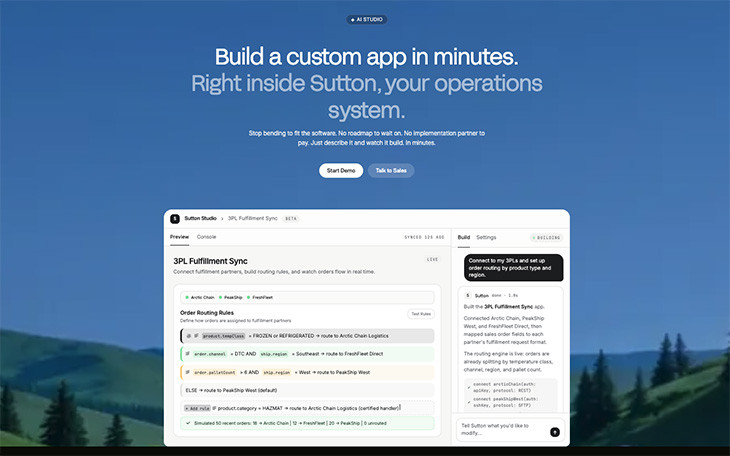
Embedded AI tools can make this operational data easier to investigate. Natural-language queries and AI-generated summaries can help teams examine inventory, performance reports and related records for patterns that deserve attention. These tools can support bottleneck analysis, but production measurements and observations from the floor remain essential for confirming what is actually limiting output.
4. Exploit Existing Capacity Before Adding More
Before adding new capacity, manufacturers can focus on getting more productive time from the constrained operation. Preparation, inspection and other supporting tasks can move to available resources when practical. This allows spending more time on work that directly contributes to output.
Teams can also reduce changeover time by standardizing procedures and applying single-minute exchange of die principles. Preventive maintenance can limit unexpected interruptions at critical equipment, while better material staging keeps operators from waiting for components or instructions. These changes help recover production time that already exists within the process.
Production scheduling also matters. Teams can prioritize orders that make the best use of limited capacity and avoid processing work that will only wait at the next stage. By addressing these losses first, manufacturers may increase throughput without immediately investing in additional equipment or labor.
5. Use Automation to Remove Repetitive Constraints
Repetitive manual tasks can become constraints when they consume production time or introduce inconsistent cycle times. Material movement and inspection are common areas where manufacturers can evaluate automation. Conveyors, feeders and robotic handling can perform these tasks while maintaining the pace required by the production line.
One study from Purdue University illustrates this approach. Researchers developed a machine-vision system that captures images of all sides of cast parts produced across 94 die-casting machines. A key requirement was to perform the inspection without affecting the existing cycle time.
However, automating a task should not create another delay elsewhere. Manufacturers need to consider inspection speed, accuracy and maintenance requirements before implementation. The strongest automation opportunities are those that improve overall production flow, rather than tasks selected simply because they can be automated.
6. Know When the Bottleneck Actually Needs More Capacity
Process improvements should come before manufacturers invest in additional capacity. However, even after these changes, some constraints may still lack the capacity needed to meet production targets. Research on flexible job shop scheduling indicates that increasing the capacity of a bottleneck can improve overall system performance.
This finding highlights the importance of directing investments toward the actual constraint. A machine that stays busy or operates at high utilization does not automatically require more capacity. Manufacturers should first confirm that the resource is limiting system throughput.
Once the need is clear, leaders can consider cross-training workers or installing parallel equipment. Each option should be evaluated against expected throughput gains and future demand. Upstream and downstream processes must also handle the added output, or the investment may move the bottleneck elsewhere.
Improve Flow, Not Just Individual Processes
Eliminating bottlenecks requires a system-level view that follows WIP and uses existing capacity before expanding it. Improving an individual machine offers limited value when those gains do not increase overall throughput. By continually measuring where capacity and demand fall out of balance, manufacturers can address emerging constraints and create more reliable production flow.