






Product launches force manufacturers to decide how much time to spend before shipping.
Although moving first can capture early demand, moving carefully protects margin and reputation once the product is in the field. Quality manufacturing and speed are often framed as rivals, yet the companies that handle the tension well treat them as two inputs to the same profit equation.
Finding the right balance depends on how much risk the product carries and how intense the competition is.
The Cost of Rushing to Market
The logic of prioritizing speed is that if a firm ships first, it’s more likely to capture early demand before rivals arrive. That advantage is especially significant for products with shorter market windows. Seasonal goods and fast-moving technology categories can reward the first arrival, making speed-first launches a reasonable bet.
This approach still carries risks, particularly regarding what gets trimmed to get there. Testing, or lack thereof, is a common casualty. When a launch lacks adequate testing protocols, it exposes the firm to recalls and the reputational damage that follows. A 2023 PLOS ONE study of product-harm crises at Chinese-listed firms found that disclosure was followed by statistically meaningful negative stock returns.
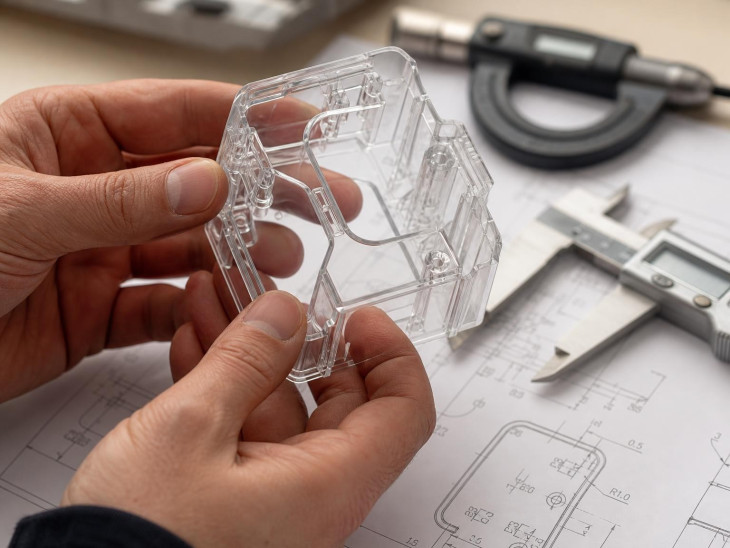
Prototyping may offer a cheaper route to the same information without sacrificing pace. A prototype run can uncover failure rates, production changes and mechanical issues that impede performance, all while the design is still easier to change.
The type of prototype is important. Disposable versions, built quickly to gather information, suit speed-focused programs, whereas evolutionary versions, refined with user feedback, suit products that improve through iteration. Before building either, consider whether a comparable product already exists and why the new one would outperform it.
The Value of a Quality-First Manufacturing Approach
Quality manufacturing reverses the cost profile, with spending occurring earlier on prevention and training, and the payoff appearing later as fewer defects reach customers. Industries where failure carries safety consequences, such as aerospace, typically favor this approach because a defect that wasn’t identified and addressed on the line becomes a field problem with warranty and recall consequences attached.
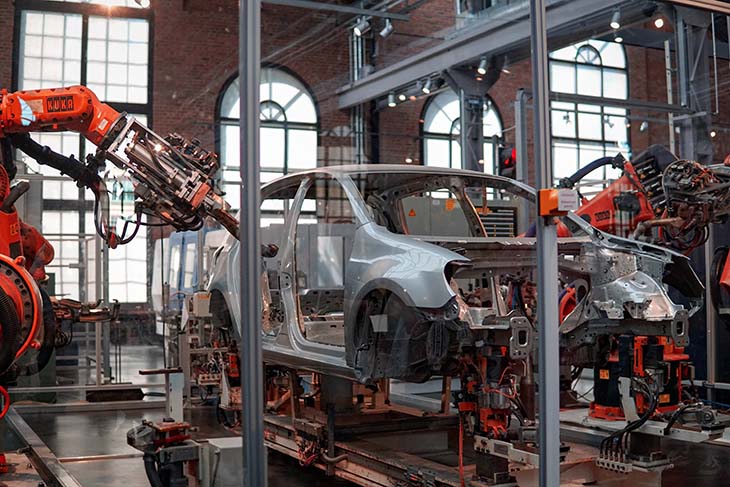
The NUMMI auto plant offers a well-documented picture of what that looks like. Workers there were told to halt operations and call whenever abnormalities appeared.
The Lean Enterprise Institute’s account describes a first year in which the plant went from the worst quality at GM to the best in the company’s history, with productivity becoming 40% above average. The plant also ran at about a car per minute, which shows that built-in quality can coexist with high throughput.
The account attributes part of that result to simplicity. NUMMI built one model on one body style, while the old GM Fremont plant had offered four brands and 112 body styles. As the account’s author puts it, quality cannot be inspected at the end and has to be built into the work itself.
When manufacturers don’t emphasize strong quality control structures, there are evident consequences. The NTSB’s 2025 findings on a door plug blowout aboard a Boeing passenger jet pointed to deficient training and oversight. The plug had been opened without required documentation. No quality assurance inspection took place when it was closed, resulting in missing securing bolts.
Balancing Both Through Process Optimization
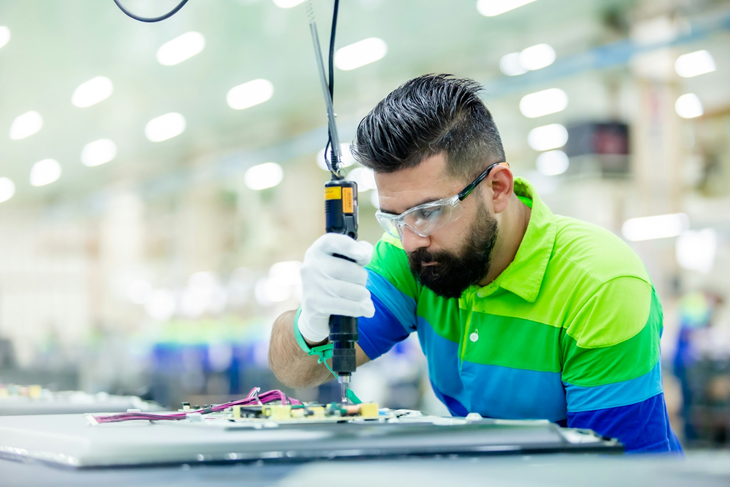
One route to both speed and quality is to move inspection from the end of the line to the point of work. Manufacturing efficiency optimization of this kind lets a plant find a defect at its source, so rework remains small and launches are more likely to stay on schedule.
Automation is making that shift more intuitive. Surveys cited by NIST's Manufacturing Extension Partnership show 24% of manufacturers deploying AI in quality operations. The agency notes that cameras and algorithms can catch defects human eyes might miss. Magellan Aerospace reduced rework by replacing paper-based systems with a digital dashboard, which gave managers a clearer view of operations and tightened quality control.
Timing within the development cycle is also a key consideration. According to a 2022 Applied Sciences study, product design largely influences manufacturing costs, making early design reviews and prototype runs cost-effective ways to identify problems.
Staged ramp-ups give a plant another way to protect both speed and quality. For example, shipping a limited first lot lets the team confirm that process settings hold under real conditions before volume increases. Any correction at that point affects a smaller batch, keeping the early release on schedule while limiting exposure.
Achieving the Balance in Your Own Plant
If you manage a launch, start by sorting products by the consequence of failure. Safety-critical parts warrant more validation before release, while products with short windows and low failure costs can proceed with lighter testing, provided a prototype run has already exposed the main risks.
Next, bring key suppliers into design review before specifications are officially frozen, as supplier involvement shapes both the schedule and the quality outcome. Late changes to purchased parts can lead to rework.
Measuring speed and quality together is also important for achieving the desired balance. Time to market alone doesn’t provide the full story, so pair it with first-pass yield and rework hours to determine the true costs of a faster launch. Process optimization works best when both metrics sit on the same dashboard, and the same people review them.
Finally, build the stop-and-fix habit into the line itself. If an operator can halt work at the first sign of an abnormality, they can catch problems while they are cheaper, which protects both the schedule and the margin.
After each launch, compare the schedule gains against the costs of rework and returns, and then adjust the testing plan for the next product. Over several launches, that record shows where extra validation paid off and where it only added time, allowing you to refine structures and processes that are ideal for your product and its market.
Achieving Long-Term Resilience With Quality and Speed
As inspection and simulation tools reach more plant floors, the distance between moving fast and moving carefully can narrow. Investing in process optimization early gives managers room to launch quickly without borrowing against future margin.
As products and markets continue to change, the balance warrants a fresh look with each launch.