






For many Italian manufacturing SMEs, production quality alone is no longer enough to compete in international markets. When engaging with major European customers, the ability to build lasting relationships, coordinate different areas of expertise and act as a reliable partner on complex projects becomes equally important.
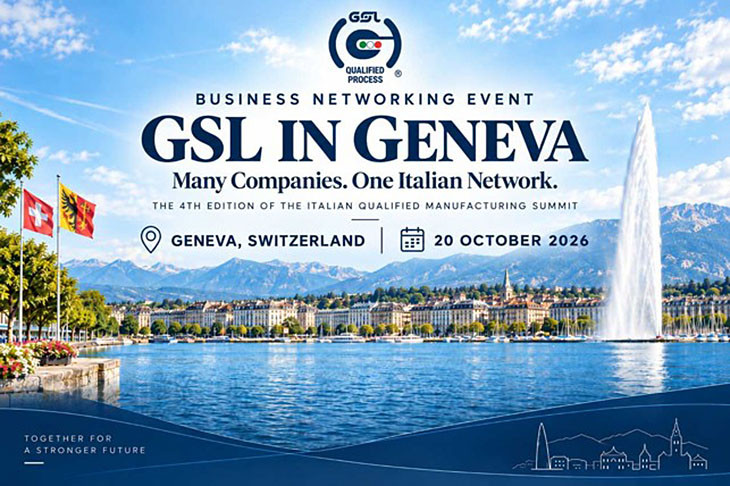
This is the context for GSL Export's recent European mission, which took a delegation representing Italian industrial subcontractors first to Geneva and then to the Lyon industrial area.
Three days of meetings with buyers, discussions with CERN in Geneva and visits to industrial companies operating in strategic sectors such as nuclear energy, steelmaking, offshore engineering and advanced industrial plant engineering.
The mission offers a concrete example of how a business network can help Italian SMEs access increasingly complex industrial and scientific supply chains.
An SME Network for Complex Industrial Markets
Founded in Monza in 1991, GSL Export today brings together more than 100 companies, primarily based in Lombardy, with expertise ranging from mechanical engineering and foundry operations to steel fabrication and advanced manufacturing processes.
The consortium is built on the principle of connecting companies with complementary specialisations, enabling them to approach international markets through a shared structure.
For individual SMEs, this means retaining their independence and production specialisation while benefiting from a shared commercial and relationship-management structure capable of developing opportunities abroad.
For major customers, the advantage lies in accessing multiple areas of expertise through a coordinated network, reducing some of the complexity associated with identifying and managing numerous suppliers.
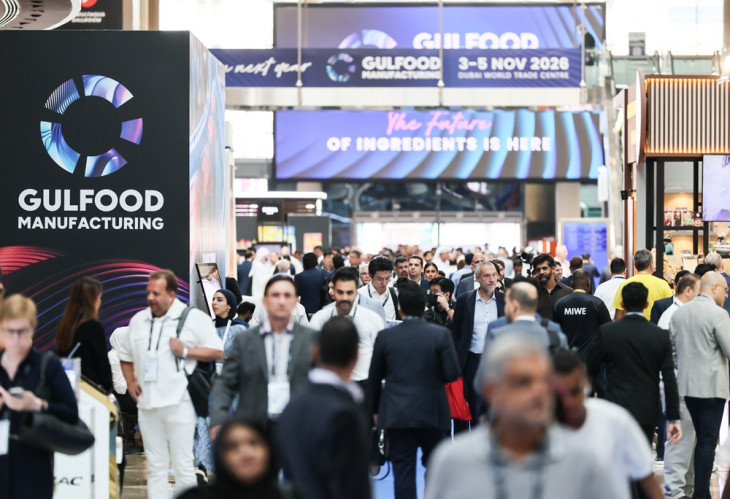
Direct Dialogue with Buyers in Geneva
The mission began with a meeting between GSL Export and prospective buyers from the Geneva area.
The event showcased the capabilities of companies in the network, particularly in machining, steel fabrication, foundry operations and advanced manufacturing processes.
Discussions made it possible to gather requirements directly from the participants and assess potential matches with the network's manufacturing capabilities.
The G Quality Mark was also presented during the day. Introduced by GSL Export to strengthen the network's shared identity, it associates member companies with common values such as quality, reliability, continuity and the ability to work in a coordinated way.
The meeting confirmed interest in a subcontracting model that combines production flexibility, customisation and integrated supply-chain management.
GSL Export at CERN: From Initial Contact to Supplier Qualification
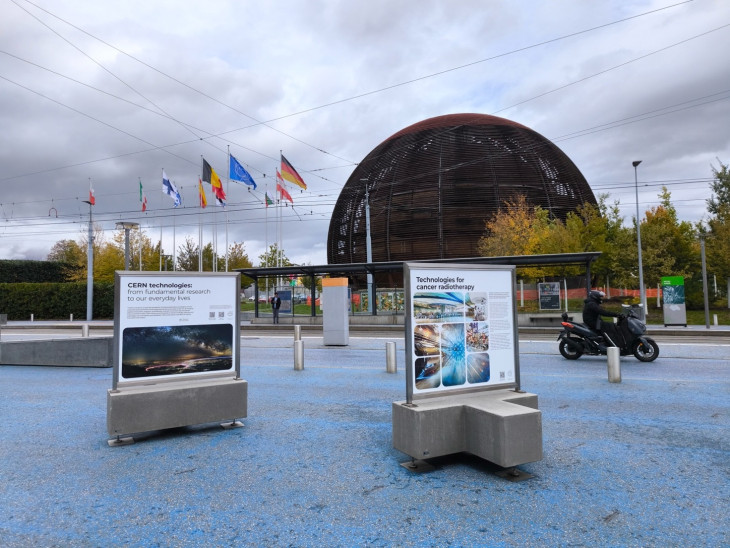
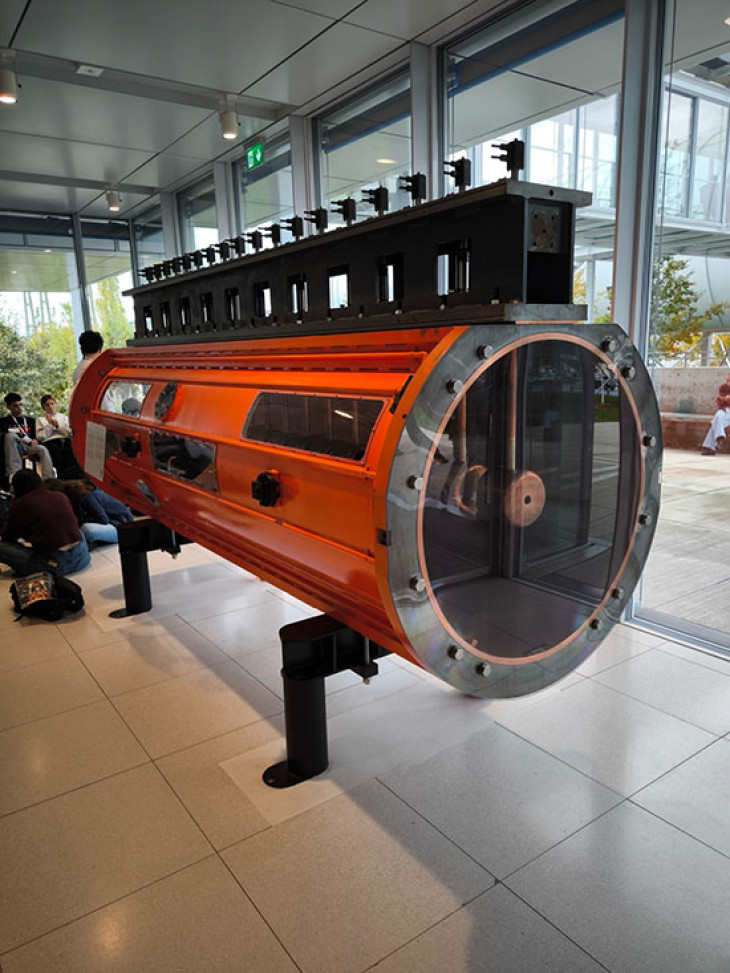
A key moment of the mission was the official meeting at CERN in Geneva, one of the world's leading particle physics research centres.
The meeting followed a process that began approximately twelve months earlier, when initial contact between CERN and several SMEs coordinated by GSL Export opened up the possibility of assessing their entry into the organisation's qualified supplier network.
One year later, this process has delivered a tangible result: the companies involved have been qualified and have already begun receiving their first requests for quotations relating to various innovation projects.
This is an important milestone because it represents more than a networking opportunity: it means gaining actual access to a supply chain with particularly demanding technical requirements.
Joining CERN's supply chain means working on projects where precision, special materials, process traceability and continuity of supply can be critical.
Capabilities Presented at CERN
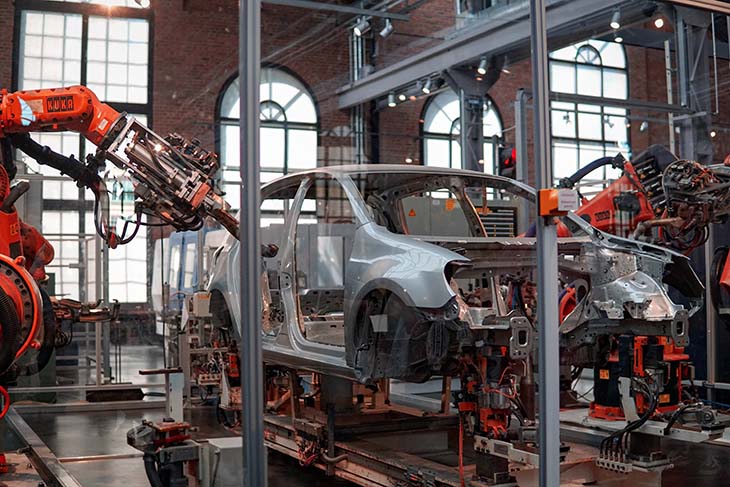
During the meeting, GSL Export outlined the main manufacturing capabilities available across its network.
These include:
- precision machining and other mechanical processing;
- medium- and heavy-duty steel fabrication;
- foundry operations;
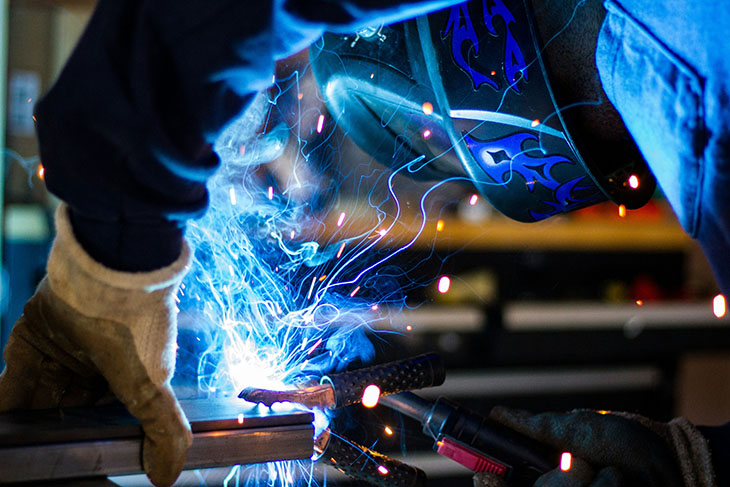
- welded structures and components;
- special processes;
- manufacture of complex, customised components.
The key factor, however, is not simply the range of processes available.
The model's value lies in coordinating multiple areas of expertise within the same project, selecting the companies best suited to each customer's specific requirements.
This approach is particularly relevant in scientific and technological sectors, where procurement often calls for non-standard solutions.
CERN's Requirements: From the Near Term to the Coming Decades
One of the most significant aspects to emerge from the discussions was the long time horizon of the projects involved.
CERN's procurement needs span several timeframes.
In the near term, they concern mechanical components, welded structures and machined parts.
In the medium term, they include components for infrastructure upgrades and the development of new experimental facilities.
Over the long and very long term, attention turns to future generations of accelerators and the infrastructure that will support scientific research over the coming decades.
For a supplier network, understanding these scenarios in advance helps identify the skills that will be needed in the future and the manufacturing or technology investments that may become strategically important.
From Geneva to Lyon: Engaging with French Industry
After the CERN meeting, the mission continued to the Lyon industrial area, with a series of technical visits to selected manufacturing sites.
The meetings covered several sectors:
- nuclear energy, including special components, welded structures and handling systems;
- steelmaking, including heavy steel fabrication and large-scale machining;
- offshore engineering, including equipment, automation and structural components;
- material-processing plant engineering, including special-purpose machinery, presses, robotic cells and sheet-metal components.
These sectors make use of many of the capabilities already represented within the GSL network.
The visits provided an opportunity to explore manufacturing processes, gather specific requirements and identify potential areas for future cooperation.
Why Technical Site Visits Matter in Industrial Subcontracting
In industrial subcontracting, visiting production facilities directly helps uncover requirements that rarely emerge from a standard sales presentation.
Observing processes, learning about the technologies used and speaking with technical teams provides a clearer understanding of where a prospective supplier's capabilities can create value.
This is also why selecting an industrial partner is rarely based on price alone.
Reliability, responsiveness, compliance with specifications, continuity and process knowledge are decisive factors in building long-term relationships.
A Potential Route to SME Internationalisation
The mission between Geneva and Lyon highlights a broader issue for Italian manufacturing.
Many SMEs possess highly specialised technical expertise, but their size can make it difficult to maintain a consistent commercial presence across multiple international markets.
The network model seeks to address precisely this challenge.
Each company continues to focus on its specialisation, while a shared structure supports activities such as business development, international relations and coordination.
Being part of a network does not mean losing one's identity. It means increasing the ability to reach markets and customers that would be difficult to access independently.
Italian Industrial Subcontracting in Europe's Future Supply Chains
GSL Export's mission shows how internationalisation, industry and scientific research are becoming increasingly interconnected.
The Geneva event opened up new discussions with buyers and international industry representatives.
The relationship with CERN progressed from initial contact to supplier qualification and the first requests for quotations.
The visits in the Lyon area created further opportunities for dialogue with strategic sectors of European industry.
The most interesting aspect, however, is the model itself.
As supply chains become increasingly complex, one possible way to strengthen the competitiveness of Italian SMEs is to connect different specialisations and turn them into coordinated manufacturing capacity.
Not a large company replacing smaller businesses, but a network in which each member retains its expertise and contributes to a shared system.
It is precisely this balance between individual specialisation and collective capability that may open up important new opportunities for Italian industrial subcontractors in European markets.