









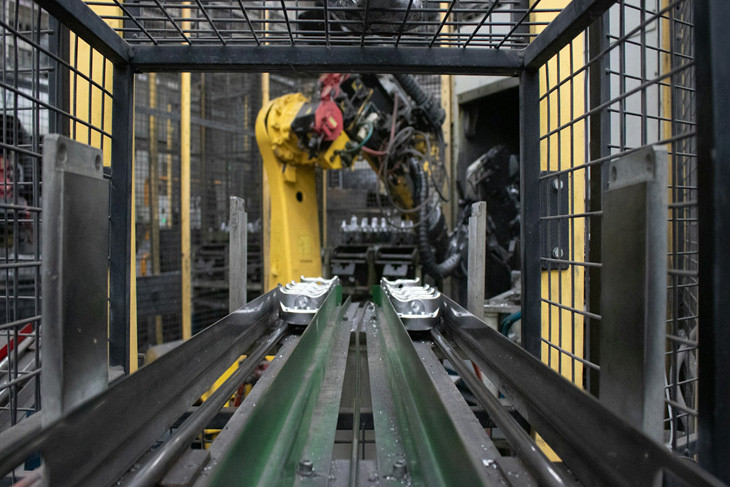
Manufacturing jobs can place workers in perilous proximity to large machines, intense heat and other hazards. Automation changes that equation, putting robots and sophisticated tools between workers and the most dangerous activities. It also gives producers an opportunity to rethink where human skills add the most value.
That change is already happening in several types of advanced equipment.
1. Using Cobots to Improve Worker Safety
Collaborative robots or cobots are designed to work alongside people and share a workplace with them. Unlike many typical industrial robots, they don’t usually require a fully contained work cell. Sensors and force-limiting controls can slow down or halt cobots if they bump into a person or hit an unexpected resistance.
OSHA, however, defines the term “cobot” as a robot capable of being used in a collaborative application. Its safety is still dependent on the entire system and its deployment.
Cobots can take over work that repeatedly stresses the body. A robotic arm might lift heavy parts as a person arranges them for assembly. It can also be used for grinding or surface finishing, reducing direct contact with dangerous equipment. Studies show how embedded force sensing enables procedures that need regulated pressure, such as sanding and deburring.
This arrangement does more than improve production safety. It modifies the kind of workforce that a production line needs. Instead, workers who formerly performed repetitive manual work may now monitor the cobot, reprogram it or step in when a process deviates from its typical operating parameters. The more automated systems facilities install, the more crucial maintenance skills become.
The change demands thorough training, not the assumption that staff can jump in and operate with the technology. Manufacturers also have to conduct risk assessments for each operation, because even a safe cobot can be carrying a sharp tool or moving a dangerous part. When used wisely, the human-machine collaboration decreases physical stress and creates more technical jobs on the production floor.
2. Updating Manufacturing Safety Strategies for Automation
Automation can lessen direct exposure to hazardous jobs, but it also creates new hazards. Employees may enter robotic work cells to clear a jam, perform maintenance or troubleshoot equipment. Interactions can cause major problems due to unexpected movement or stored energy. Thus, safety procedures have to keep up with technology on the plant floor.
To identify hazards and define appropriate safeguards, manufacturers should conduct a thorough risk assessment before automated equipment is put into service. Leaders must think about how employees will interface with the system during normal operation and when anything goes wrong. The inspection should also look at the tools attached to the machine and the materials it handles.
Manufacturing safety concepts remain valid in an automated environment, but manufacturers must adapt them to new workflows. For example, lockout and tagout processes may need to be revised when a robotic system comprises multiple connected energy sources. Workers should receive updated information on any changes to established practices routinely. However, the gear keeps changing, and one training session isn’t sufficient.
Leadership should see safety planning as an integral component of automation adoption, not an end-of-process compliance check. That involves bringing in operators early and assessing near misses for missed dangers. Employees should have a clear means to report unusual equipment behavior without pressure to keep the production going.
A structured strategy allows producers to realize the benefits of automation without moving the risk elsewhere in the process. It also prepares the worker to use more complex equipment with confidence.
3. Promoting Safer Material Movement With AGVs and AMRs
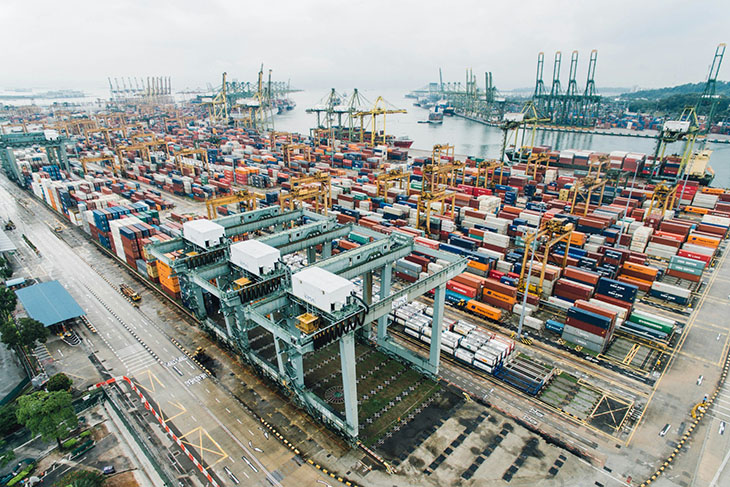
Automated guided vehicles (AGVs) and autonomous mobile robots (AMRs) move goods around a facility without a human driver. AGVs usually follow preset paths marked with wires, magnetic strips or reflectors. AMRs have onboard sensors and mapping software to assess their environment, allowing them to reroute if they encounter an obstacle.
These technologies can reduce the amount of ordinary material handling that a forklift performs. This is important because a forklift or its load can strike or crush workers. OSHA notes that about 25% of forklift-related fatalities are due to overturns, and traffic control is an important factor in reducing mishaps. Driverless equipment can replace proper forklift trips and limit employees’ exposure to these hazards.
AGVs and AMRs still require careful planning for safety. Speed limits must account for pedestrian activity, and travel zones must provide sufficient visibility. Employees also need instruction on car behavior and what to do if a vehicle stops unexpectedly. Sensors can prevent crashes, but they don’t eliminate the necessity for well-defined procedures.
Automated transport also affects labor strategy. Workers who used to spend much of their shifts moving parts can do work that requires more judgment, such as evaluating supplies or fixing manufacturing problems. Technicians may also be required to monitor vehicle performance and service navigation systems.
Before deploying this technology, manufacturers should consider material flow. A poorly planned route can cause congestion rather than productivity gains. With the right physical layout, AGVs and AMRs can help reduce wasteful forklift traffic while keeping goods moving consistently.
4. Employing Machine Vision to Improve Quality and Safety
Machine vision systems use cameras and software to analyze images for inspection of products or manufacturing areas. The AI-enabled versions compare visual information against trained models to detect flaws and anomalies. They enable systems to continuously analyze items as they move through manufacturing, rather than relying on occasional manual checks.
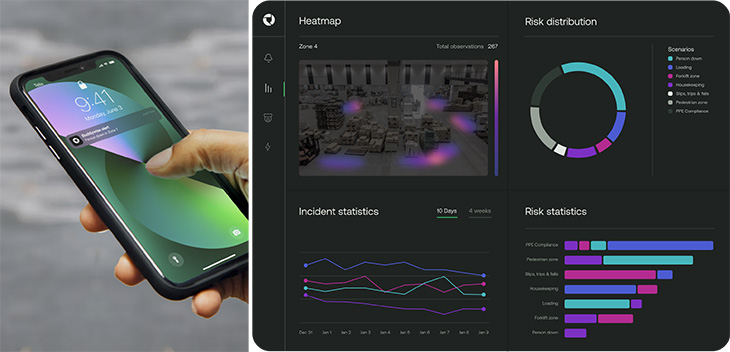
Automated inspection removes the tedious visual work that employees perform right next to running machinery. Cameras can also look into places that could be difficult or risky for someone to enter directly. Machine vision can warn workers about possible hazards or activities outside usual conditions in active work locations.
Technology also allows for more consistent quality control. In a peer-reviewed study, an automated optical system used on tens of thousands of paper cups obtained a 99.7% defect-detection accuracy rate. Performance depends on the application, but the outcome demonstrates how machine vision can enable rapid examinations without the strain of repetitive manual checks.
Then, employees can evaluate the results in doubt and identify the causes of the problems. That changes their job from constant inspection to analysis and process improvement. Visual data can help show gradual changes in equipment that need service before a breakdown halts operations.
Lighting and product variation can affect results, so manufacturers still have to test system accuracy under real-world working conditions. Smart tooling, including machine vision, enhances industrial safety and provides continuous production data to complement human judgment.
Building a Safer, Smarter Future
Automation is most valuable when it keeps workers out of undue danger and supports their judgment. Smart tooling can also increase consistency and provide staff with greater opportunities to gain additional technical abilities.
However, safer operations still require detailed planning and training that keep up with changing equipment. Manufacturers should identify where workers are most at risk and consider whether automation can improve safety in those areas.