






Behind the deceptive simplicity of a crisp banknote lies an extraordinarily complex, high-tech engineering process. As digital tools lower the barriers to forgery, industry pillars like French cash printer Oberthur Fiduciaire are proving that delivering a secure, functional means of payment depends less on the traditional printing press, and more on a fiercely contested race to lock down and license global intellectual property.
To the uninitiated, the banknote industry begins and ends at the printing press. In reality, however, physical currency relies on a labyrinthine, high-stakes value chain that stretches from raw material inputs to the industrial shredding of worn bills; a lifecycle calibrated entirely to protect the integrity of a nation's legal tender. At the core of this ecosystem lies a fiercely contested intellectual property landscape. Everything from the proprietary chemistry of colour-shifting inks to the microscopic architecture of durable cotton-polymer substrates is locked down by a dense grid of patents. This relentless research race transforms a simple slip of paper into an extraordinarily sophisticated tech product where defending a patent is not merely about shielding corporate margins, but securing public trust.
The Digital Frontier and the Democratisation of Forgery
This battle is as old as currency itself. In 400 BC, counterfeiters plated base metals with silver; by the 10th century, China’s first paper notes sparked severe inflation due to rampant forgery. Today, despite the rise of digital banking, the threat has simply migrated to a digital frontier. The immediate challenge is democratization. Law enforcement agencies like Europol warn that AI-assisted design and advanced digital printing have dismantled the traditional barriers to entry. Forgers no longer need a lifetime of skilled apprenticeship or million-dollar industrial presses to compromise a currency. Consequently, the window for currency issuers to react has collapsed from decades to months, and continuous innovation has become an existential necessity.
Few institutions illustrate this pivot from passive printing to active defence more clearly than Oberthur Fiduciaire. Founded as a modest print shop in Rennes during the 19th century, the French security printer has evolved into a heavily integrated industrial powerhouse. Today, the firm handles the entire fiduciary lifecycle end-to-end, serving as both a primary contractor for global central banks and a partner to fellow security printers. Surviving in this modern climate required a total restructuring of assets, including the strategic acquisition of its own banknote paper mill to secure its raw material pipeline. Yet, in an era of democratization, even total supply chain control is merely table stakes. Survival demands a deliberate tech-first posture, says Thomas Savare, Chairman of Oberthur Fiduciaire: “Innovation—together with the protection of intellectual property—is absolutely vital. Simply knowing how to print banknotes is no longer sufficient. Success now depends on the ability to develop security features and techniques that make each note unique and impossible to forge.”
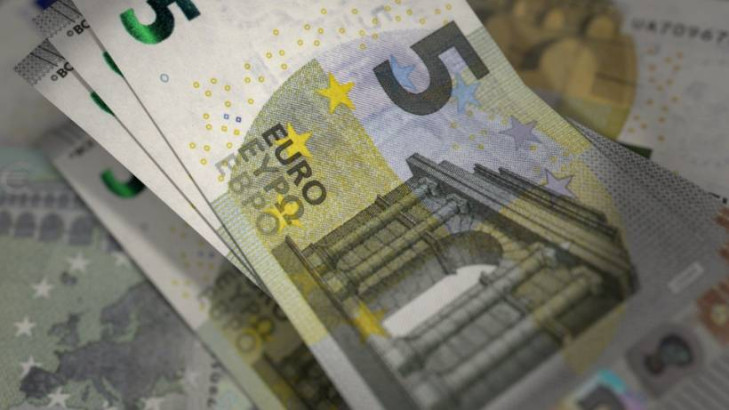
Currently, the frontline of this technical race is being fought through micro-optics. To accelerate its path forward, Oberthur Fiduciaire partnered with the Swedish technology firm Rolling Optics, merging its own extensive portfolio of innovations with specialized micro-optical engineering. This corporate synergy has fast-tracked a new generation of embedded security features. Components like Pulsar™ rely on intricate micro-lenses, while their latest premium thread, Anima™, creates kinetic movement patterns across the surface of the bill. Crucially, these features are designed for the untrained eye. By tilting a banknote to trigger immediate 3D depth or fluid motion, everyday consumers can authenticate currency in a fraction of a second without specialized equipment. This intuitive ease of use targets a counterfeiter's primary track: their reliance on human distraction and the public’s historical blind spot for overly subtle security details.
Securing the Supply Chain Through Patents
Deploying these visual roadblocks, however, hinges entirely on a robust intellectual property framework. From a defensive perspective, patents do far more than insulate corporate revenues; they bottleneck the physical supply chain. By cordoning off specialized chemical processes, rare raw materials, and precision tooling, IP protection keeps the machinery of modern currency out of the grey market. Law enforcement bodies, including the U.S. Secret Service, have long favoured this upstream chokehold, noting that the most definitive way to dismantle illicit printing syndicates is to starve them of industrial-grade inputs.
In this case, the strategic value of intellectual property extends beyond denial of access. Strict patent enforcement underpins the industry’s capacity for collective, cross-border scale. Rather than hoarding tech inside a corporate vault, a predictable patent environment gives creators the security to license their systems to external paper mills, competing printers, and sovereign central banks. This controlled proliferation enables global currency standards to upgrade rapidly without forcing every state-backed printer to repeatedly reinvent the industrial wheel. We see this mechanism clearly in Bioguard, an anti-pathogen substrate treatment engineered by Oberthur Fiduciaire.
Born from the H1N1 health crisis of the early 2000s, the chemical treatment actively neutralizes bacteria viruses and fungi on the cash surface. Recognizing its systemic utility during subsequent global health disruptions, the firm chose to open the technology to the broader ecosystem, tells Etienne Couëlle, Managing Director of Oberthur Fiduciaire: "Given Bioguard's proven effectiveness in uncertain sanitary conditions, Oberthur Fiduciaire decided to make this technology available to all central banks and banknote producers who would like to benefit from it." To date, this single licensed enhancement shields more than ten billion banknotes worldwide.
Integration of a functional feature like this delivers tangible social dividends for everyday citizens – and shows that the modern banknote is no longer merely a slip of paper but a highly regulated, tech-driven public utility. Maintaining its integrity demands a capital-intensive cycle of R&D, vertical asset integration, and targeted tech acquisitions, while intellectual property frameworks are the scaffolding that keeps this costly cycle spinning. By legalizing the safe transfer of proprietary science, IP rights convert isolated breakthroughs into a standardized global shield, anchoring public trust in physical currency against an increasingly sophisticated threat landscape.